

Key Takeaways
- Proper cleaning techniques are essential for maintaining the quality of wallet leather.
- Leather wallets can develop a rich patina with correct care over time.
- Incorrect cleaning methods can cause significant damage to leather wallets.
- Understanding how to clean wallet leather ensures it ages gracefully rather than deteriorates.
Why Your Leather Wallet Deserves More Than a Pocket Wipe
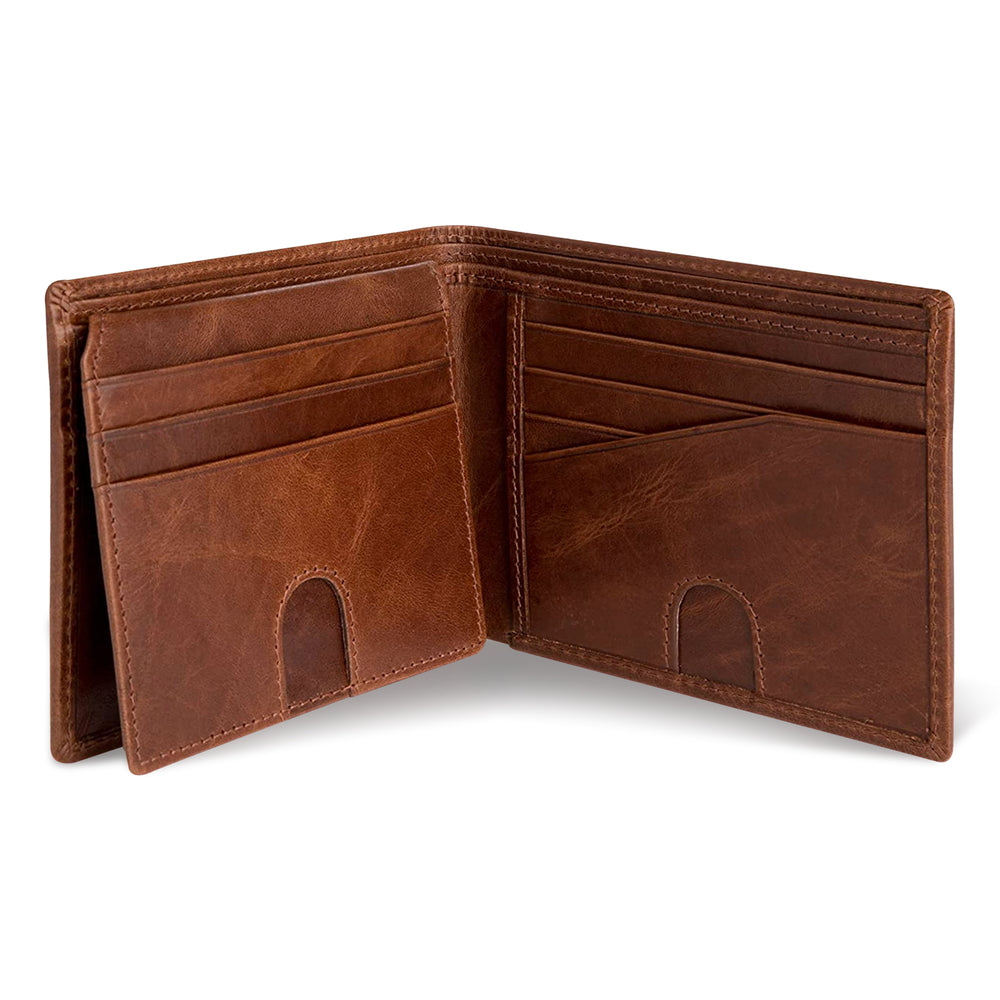
I've watched countless Bull Guard wallets transform in customers' hands, from pristine leather companions to rich, patinated extensions of their daily lives. Yet I've also seen beautiful wallets destroyed by well-meaning owners who treated leather like plastic. The difference isn't luck; it's understanding that how to clean wallet leather properly determines whether your wallet ages gracefully or degrades rapidly. If you want a wallet that stands up to daily use and still looks great, consider a removable ID wallet for added versatility and easy maintenance.
Your leather wallet absorbs body oils, dust, and environmental elements daily. This isn't damage, it's leather developing character. Proper cleaning preserves both functionality and the evolving patina that marks a well-lived accessory. The key distinction: cleaning should enhance leather's natural aging process, never strip it away.
We craft wallets from full-grain and top-grain leather precisely because these materials deserve maintenance, not disposal. A properly cared-for Bull Guard wallet becomes softer, richer, and more distinctly yours over time, genuine sustainability through intentional care that extends wallet life from years into decades. For more inspiration on finding a durable leather wallet for everyday use, check out our guide.
Understanding Your Leather: Why One-Size-Fits-All Cleaning Fails

The common myth that "full grain is always superior" oversimplifies leather quality. Like restaurants, the "cut of meat" (full grain/top grain) matters, but the "chef" (tannery), ingredients (hide quality), and preparation (finishing) determine the final result. Two full-grain leathers can perform vastly differently based on tanning methods and tannery expertise.
How to Identify Your Leather Type at Home
Run your fingers across the wallet surface. Full-grain shows natural grain variation and texture; top-grain feels smoother and more uniform. For the water droplet test, place a small drop on a hidden area, full-grain absorbs slightly while top-grain beads up initially due to its protective coating. This identification guides your cleaning approach since different tanning methods respond differently to moisture and cleaning products.
If you're interested in exploring more about classic wallet designs, you might enjoy reading about the classic trifold leather wallet style and how it compares to modern options.
The Environmental Reality: How Daily Life Marks Your Leather
Body oils from regular handling transfer to leather, keeping it supple while attracting fine particles. Pockets trap lint, loose change residue, and fabric fibers that accumulate in seams over weeks. Urban air pollution and humidity fluctuations cause surface oxidation, slight darkening that's part of natural patina, not damage requiring correction.
Patina vs. Stains, Know the Difference
Patina (preserve this): Even color deepening across the wallet surface over months, developing from light exposure and natural oil absorption. This is authenticity and should be celebrated.
Stains (require action): Localized dark spots from spills, ink, or trapped moisture. Examples include coffee rings on card slots or ballpoint pen marks on exterior surfaces.
For those who value both style and function, a removable ID wallet is an excellent choice for keeping your essentials organized and easy to clean.
Pre-Cleaning Inventory: Empty, Inspect, and Plan
Remove every card, cash bill, receipt, and coin, set a 5-minute timer to inspect each compartment thoroughly. Moisture or cleaning product can seep between cards and damage magnetic strips, while coins trap water in crevices.
Visual Inspection Protocol
Hold your wallet under indirect light to identify all visible dirt, stains, or sticky spots. Use a flashlight to examine card slots and seams for debris piles. Feel the leather surface, dry and stiff leather requires more intensive conditioning after cleaning, while supple leather needs gentler treatment.
Categorize each stain by type (dust/dirt, oil/grease, ink, water, salt) and location. Different stains require different cleaning agents and dwell times, misidentification wastes time or causes damage.
Removing Loose Debris: The Underrated First Step

Clear surface contamination before applying any cleaner to prevent grinding dirt into leather. Hold your wallet over a trash bin and gently shake for 10-15 seconds, letting gravity work naturally.
The Mechanical Shake and Brush Method
Use a soft-bristled brass brush or old toothbrush to sweep card slot edges and seam lines in circular motions, 2-3 passes per area. For packed lint in tight corners, use a wooden toothpick to gently dislodge fibers without forcing or stabbing. Complete the process by wiping the entire exterior and interior pockets with a dry microfiber cloth in one direction to avoid grinding particles back in.
If you want to ensure your wallet remains in top condition, investing in a removable ID wallet can make regular cleaning and maintenance even easier.
Removing Loose Debris: The Foundation of Proper Leather Care
Before you apply any cleaner to your wallet, you must clear away the surface contamination that's been accumulating in pockets and seams. This isn't just tidiness, it's preventing you from grinding dirt particles deeper into the leather during the cleaning process.
The Mechanical Shake and Brush Method
Hold your wallet over a trash bin and give it 10-15 gentle shakes, letting gravity do the work. Follow with a soft-bristled brush (an old toothbrush works perfectly) to sweep along card slot edges and seam lines in small circular motions. For packed lint in tight corners, use a wooden toothpick to gently dislodge debris, never force or stab, just glide along the crevices.
Finish by wiping the entire exterior and interior pockets with a dry microfiber cloth in one direction. Circular motions can actually grind particles back into the leather, so maintain that single-direction sweep. Your wallet should feel noticeably smoother to the touch when this step is complete.
Compressed Air for Stubborn Buildup
For wallets with significant debris in deep card slots, use electronics-grade compressed air held 6 inches from the wallet surface. Apply 2-3 short bursts angled downward into slots and bill pockets, then repeat from the opposite angle to dislodge debris trapped at seam bottoms. Use this method sparingly, prolonged spray on the same spot can dry the leather.
Targeted Stain Removal: Matching Method to Problem
Not all stains are created equal, and generic cleaning advice often fails because it doesn't account for the specific chemistry of what you're trying to remove. Here's how to clean wallet leather based on the exact type of contamination you're facing.
Dust and General Dirt Buildup
Mix 2 parts distilled water with 1 part unscented baby shampoo in a small bowl. Dip a cotton cloth into this solution and wring out excess moisture until the cloth is damp, not wet. Work in circular motions across each section of the wallet for 30-45 seconds, then immediately follow with a dry cloth to remove excess moisture. Apply this solution within 3 minutes of mixing, the emulsion weakens over time and becomes less effective.
Oil and Greasy Buildup
Body oils from daily handling require a dedicated leather cleaner formulated for oil removal. Apply 3-4 small dots of cleaner to a soft cloth and rub in gentle circular motions over the affected areas. The critical step is buffing: use a clean, dry cloth to remove all residue within 5 minutes of application. Incomplete buffing leaves a sticky film that actually attracts more dirt than the original problem.
Conditioning Requirement: Oil-removal cleaners are more drying than soap solutions. Plan to condition your leather within 1-2 hours of using these products to prevent brittleness.
Ink and Ballpoint Pen Marks
For mild ink marks, test a clean pencil eraser on a hidden area first, then gently rub the mark in one direction for 15-20 seconds. Wipe away eraser residue with a slightly damp cloth and assess the results.
Stubborn ink requires 70% isopropyl alcohol on a cotton swab. Dab, don't rub, the mark, holding for 5 seconds before letting the alcohol evaporate. Repeat this dab-and-wait cycle up to 3 times, but never oversaturate. Alcohol dries leather aggressively, so condition immediately after treatment.
Water Stains and Salt Residue
Light water rings from mineral deposits respond to gentle wiping with a cloth dampened in distilled water. The key is treating the entire wallet surface, not just the stain, to even out mineral concentration. For salt stains from winter roads or coastal exposure, use a solution of 1 part white vinegar to 2 parts distilled water, followed by a rinse with pure distilled water to remove the vinegar residue.
If you ever misplace your wallet during your cleaning routine, you may find these tips on how to find lost wallet helpful for peace of mind.
Conditioning: The Step That Separates Care From Maintenance

Cleaning removes dirt, but it also strips the fine oils from your leather's surface layer. Without reconditioning, your wallet becomes dry, stiff, and prone to micro-cracking within weeks. This isn't optional, it's the difference between leather that ages gracefully and leather that simply deteriorates.
For full-grain leather like Bull Guard uses in our premium wallets, choose a beeswax-based or natural oil conditioner. These are absorbed slowly and create the soft, natural finish that allows proper patina development. Top-grain leathers need lighter conditioners formulated for coated surfaces, as heavy oils can cause uneven darkening.
Proper Application Technique
Wait until your wallet is completely dry from cleaning, minimum 4 hours, ideally overnight. Dispense a pea-sized amount of conditioner onto a clean cloth. More isn't better; excess conditioner looks sticky and attracts dirt.
Work in slow circular motions: 60-90 seconds on the back, 60 seconds on the front, 30 seconds on the sides. Use a cotton swab to apply conditioner sparingly inside card slots, just enough to darken the leather slightly. After a 15-20 minute absorption period, buff away surface residue. For a comparison of popular wallet brands, you might also like this article on fantom vs ridge wallet.
Frequently Asked Questions
What are the best steps to properly clean and maintain a leather wallet to ensure it develops a rich patina?
Start by gently removing loose debris with a soft cloth, then apply a leather cleaner suited to the specific stain type. Follow with a quality leather conditioner to maintain suppleness and encourage a rich, natural patina. Regular, careful care helps your wallet age gracefully, becoming softer and more uniquely yours over time.
How can I identify whether my leather wallet is full-grain or top-grain, and why does this matter for cleaning?
Identifying full-grain versus top-grain leather involves looking beyond labels to the leather’s feel, texture, and finish, as quality depends on the tannery’s expertise and tanning process. This matters because different leathers may react uniquely to cleaning products; understanding your leather helps you choose appropriate cleaners and conditioners that preserve its durability and appearance.
Why is it important to avoid treating leather wallets like plastic when cleaning them?
Leather is a natural, breathable material that develops character with use, unlike plastic which is inert and uniform. Treating leather like plastic, using harsh chemicals or excessive moisture, can strip away oils, damage the surface, and prevent the wallet from aging into a rich patina, ultimately shortening its lifespan.
How do environmental factors like body oils, dust, and pollution affect the appearance and care of leather wallets?
Body oils, dust, and pollution naturally accumulate on leather, contributing to its evolving patina rather than causing damage. Proper cleaning removes surface buildup without stripping essential oils, allowing the leather to develop a unique, lived-in character while maintaining its strength and beauty.