

Key Takeaways
- Vintage leather is distinguished by its age and the stories it carries from years of use.
- It develops a rich patina and character that new leather cannot replicate.
- True vintage leather typically refers to pieces that are at least 20-30 years old.
- Some artisans use the term vintage leather more loosely to describe intentionally aged or naturally weathered leather.
What Makes Leather "Vintage", And Why It's Worth the Investment
Vintage leather isn't simply old leather. It's leather that has lived, that has absorbed the stories of its owner through years of daily use, developing a rich patina and deepening character that factory-fresh materials simply cannot replicate. True vintage leather represents a specific stage in a leather item's lifecycle: typically pieces that are at least 20-30 years old, though some craftspeople use the term more loosely to describe leather that has been intentionally aged or naturally weathered to achieve vintage aesthetics.
What distinguishes authentic vintage leather from new leather is the journey it has taken. New leather leaves the tannery with a uniform finish and predictable texture. Vintage leather tells a different story, its surface bears the marks of time, showing variations in color depth, subtle creasing patterns, and a softness that comes only from extended wear and careful conditioning. When you carry a vintage leather wallet or wear a vintage leather jacket, you're holding craftsmanship that has proven its durability across decades.
The sustainability angle matters too. Investing in vintage leather, whether an authentic piece from decades past or a new item crafted with vintage-inspired techniques, means you're choosing longevity over disposability. A quality leather item that develops patina over 10, 20, or 50 years outperforms fast-fashion alternatives that wear out in months.
The Science of Patina: How and Why Leather Transforms Over Time

Patina is the visible evidence of leather's transformation, the subtle darkening, softening, and deepening of character that happens when quality leather meets consistent use and proper care. Understanding patina helps explain why vintage leather commands respect among those who understand craftsmanship.
Patina forms through a combination of environmental exposure and physical interaction. As leather is handled, oils from your hands gradually permeate the hide. Sunlight exposure causes the surface to deepen in color. Air oxidation subtly alters the leather's chemistry. Unlike scratches or damage, patina is the leather's way of maturing gracefully, each mark represents a moment of use, a journey taken, a purpose fulfilled.
Patina Development Timeline
- Full-grain leather: Visible patina in 6-12 months, dramatic transformation after 2-3 years
- Top-grain leather: Subtle development requiring 12-18 months for significant character
- Key factor: Daily use with light conditioning 2-4 times yearly accelerates beautiful aging
For craftspeople like Marcela at Bull Guard, patina is the proof of craftsmanship. It demonstrates that the leather was selected for its durability and tannery quality, inferior leather doesn't develop rich patina; it simply deteriorates. A wallet or bag that patinas beautifully is one that will outlast its owner, creating a deeply personal connection between object and owner.
Full-Grain vs. Top-Grain: Understanding Leather Quality Beyond Labels
The leather industry uses standardized terminology, full-grain, top-grain, genuine, but these labels often confuse rather than clarify. Understanding what they actually mean helps you evaluate whether a piece will develop authentic vintage character.
Full-grain leather retains the hide's entire surface, including its natural grain pattern, small scars, and variations. This completeness is why full-grain leather develops the richest patina and ages most beautifully. It's more durable because the grain structure remains intact, though it shows every mark, scratches, water spots, and creasing are visible, which many view as part of its charm as it ages.
Top-grain leather has had its surface sanded or buffed smooth, then finished with protective coatings. This creates a uniform appearance and hides natural imperfections. While top-grain remains durable, the protective coatings can limit patina development. The leather won't darken or soften as dramatically as full-grain because the finish layer acts as a barrier.
| Aspect | Full-Grain | Top-Grain |
|---|---|---|
| Surface Treatment | Complete natural hide retained | Sanded smooth, coated finish |
| Patina Development | Rich, dramatic aging | Limited by protective coating |
| Durability | Maximum strength from intact grain | Good durability, uniform appearance |
| Best For | Vintage character development | Professional, structured items |
Here's the critical insight often missed: two leathers with identical "top-grain" labels can perform completely differently. Quality depends far more on hide selection, tanning method, and tannery expertise than on the grade label alone. Think of it like restaurants: the "cut" of meat matters, but the chef's skill, ingredient sourcing, and preparation technique determine the final dish. Bull Guard partners with trusted tanneries that specify premium hides selected for hand-feel, longevity, and patina potential.
For more on how to choose a durable leather wallet for everyday use, see our in-depth guide.
Vintage Leather Care: The Practical Foundation for Lasting Character
Vintage leather, whether genuinely vintage or new leather destined to become vintage, requires specific care to ensure it develops and retains its character over time. The foundation of vintage leather care is gentle, regular maintenance that preserves the hide’s natural oils and structure.
Here’s how I care for my own Bull Guard pieces and recommend you do the same:
- Clean gently: Wipe with a soft, dry cloth to remove dust. For deeper cleaning, use a slightly damp cloth and avoid harsh soaps or chemicals.
- Condition sparingly: Apply a high-quality leather conditioner 2-4 times per year, focusing on areas that see the most use. This keeps the leather supple and prevents cracking.
- Avoid excess moisture: If your leather gets wet, blot (don’t rub) with a dry cloth and let it air dry naturally, never use heat.
- Store smart: When not in use, keep your leather item in a breathable bag or box, away from direct sunlight and humidity.
With this simple routine, your leather will reward you with decades of evolving beauty, each mark and shade a testament to your adventures together.
Identifying Authentic Vintage Leather vs. Faux Aging Techniques

Not all leather marketed as "vintage" is authentically vintage, and not all artificially distressed leather is poor quality. Understanding the distinction helps you make informed choices about what you're investing in.
Genuine Vintage Pieces: What to Look For
Authentic vintage leather shows consistent patina across high-contact areas, handles, edges, corners where hands naturally grip, while interior surfaces remain relatively preserved. The leather feels soft and supple throughout, not just on the surface. Stitching on genuine vintage pieces may show slight irregularity, a marker of hand-craftsmanship rather than factory-line perfection. Color variation is natural and welcome; uniform color across an "old" piece often indicates artificial aging.
Intentional Distressing vs. Authentic Aging
Modern craftspeople sometimes deliberately distress new leather to achieve vintage aesthetics using hand-tools, controlled heat, and wax applications. Quality distressing can be beautiful and legitimate when makers are transparent that the item is new leather with vintage-inspired finishing, not vintage itself. The difference becomes apparent with time, intentionally distressed leather continues aging from that starting point, while authentic vintage leather has completed most of its transformation. For more details, see our article on distressed leather.
Faux Leather Red Flags
Avoid pieces labeled "vintage look" but made from polyurethane, PVC, or bonded leather. These materials don't age gracefully; they crack, peel, and deteriorate without the richness that comes from quality hides. Genuine vintage leather feels substantial and organic in your hand, faux materials feel hollow by comparison. To understand the risks of imitation materials, read our guide on faux synthetic leather.
The Investment Case: Why Vintage Leather Wallets and Accessories Outlast Alternatives
Building a case for vintage leather requires understanding longevity economics. A quality leather wallet costs $30-80 depending on style and leather type. Fast-fashion alternatives might cost $10-15 but typically last 6-18 months before seams split or material degrades. A vintage-quality leather wallet, properly maintained, reliably lasts 10-20+ years, meaning the true cost-per-year dramatically favors quality.
| Feature | Bull Guard Premium Leather | Fast-Fashion Wallets | Standard Leather Brands |
|---|---|---|---|
| Leather Thickness | 1.2-1.5mm full-grain | 0.8mm synthetic/bonded | 1.0mm top-grain |
| Stitching Quality | 8-10 stitches/inch, waxed thread | 4-6 stitches/inch, standard thread | 6-8 stitches/inch, standard thread |
| Expected Lifespan | 15-25+ years | 6-18 months | 3-7 years |
| Patina Development | Rich, natural aging | Deterioration, not patina | Limited patina through coating |
| RFID Protection | Integrated blocking technology | Rarely included | Optional add-on |
Durability Through Design
Vintage-quality pieces use substantial leather that resists creasing and puncture. Bull Guard wallets use waxed thread with tight, regular spacing, often 8-10 stitches per inch, creating seams stronger than the leather itself. This structural integrity is evident immediately: quality leather holds shape better, resists warping, and stands up to daily use. If you want a slim, modern take on classic durability, consider the Slim Leather Wallet or the Airtag Leather Card Holder Wallet for Men for added tech-friendly features.
Building Your Vintage Leather Foundation: Where to Start
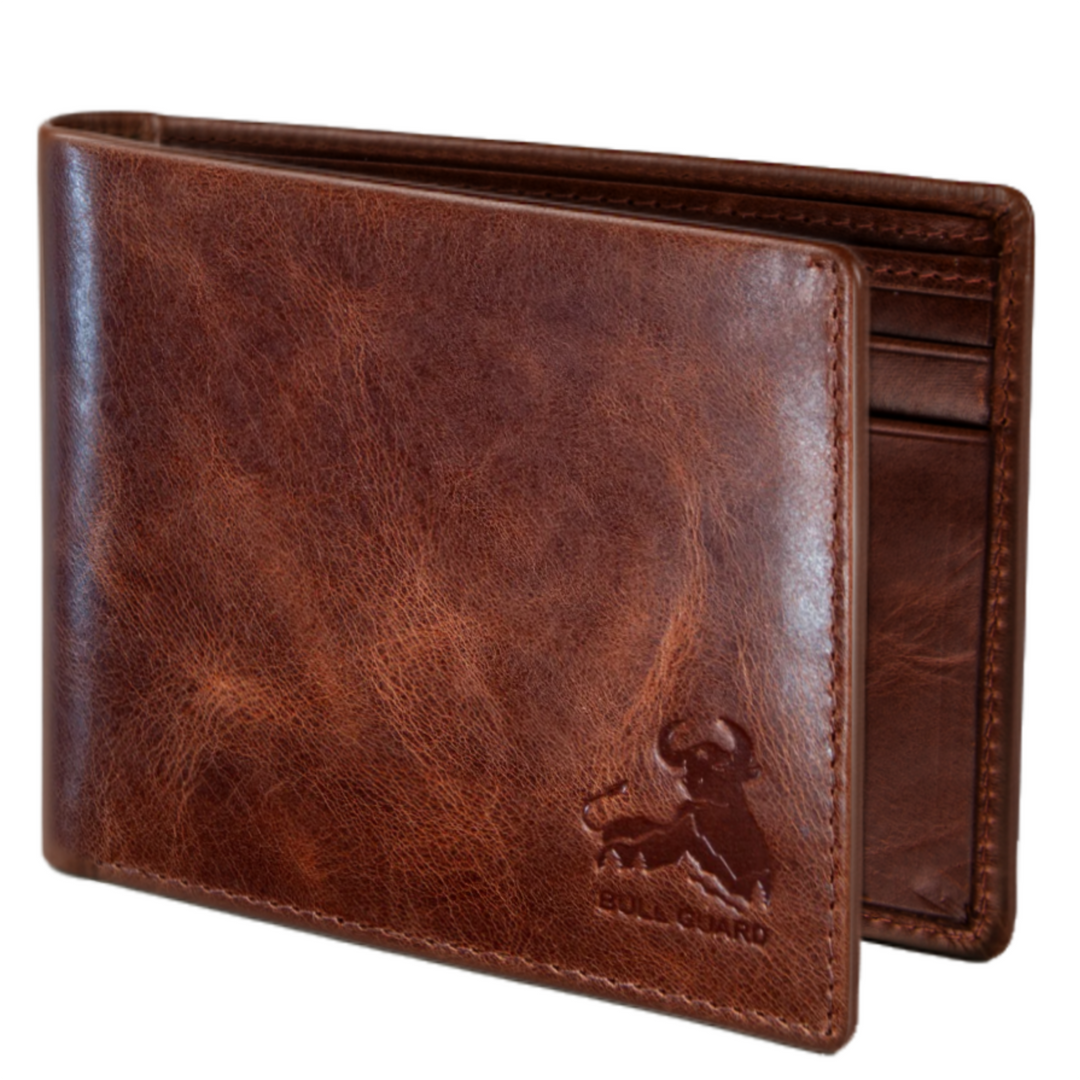
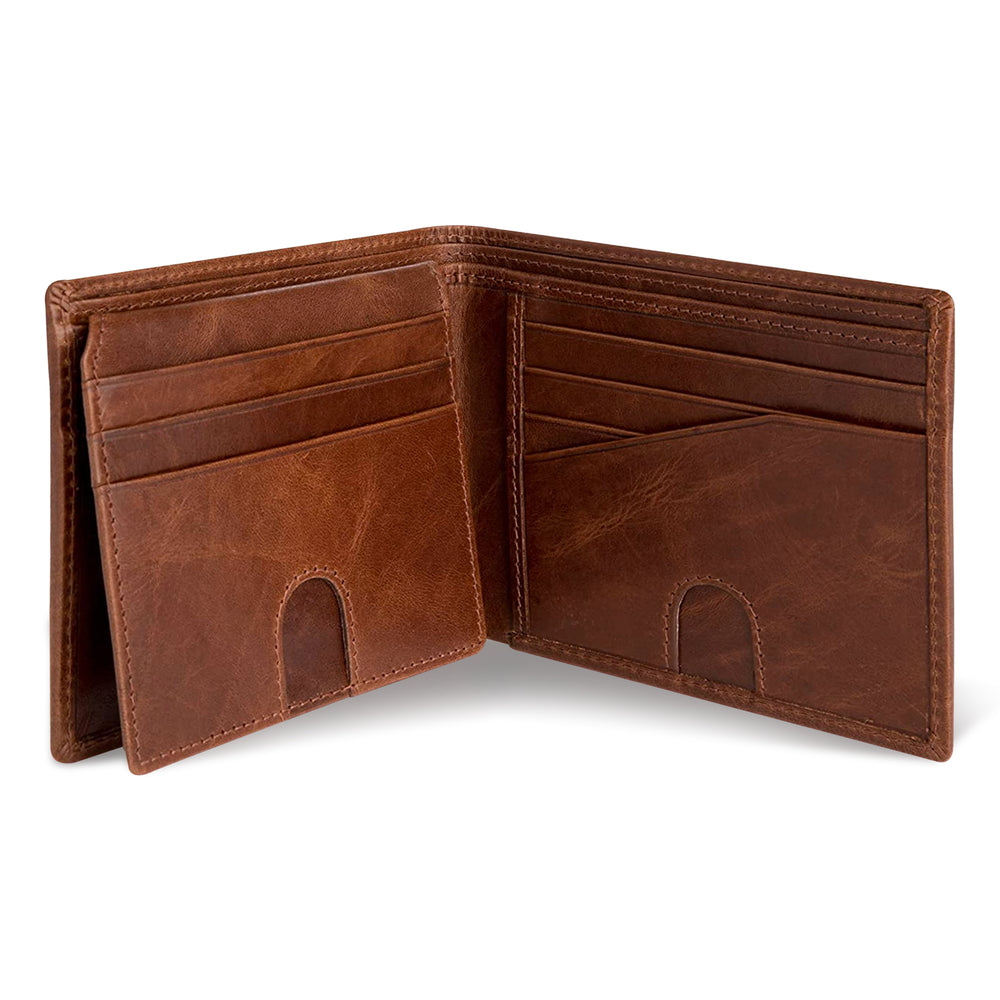
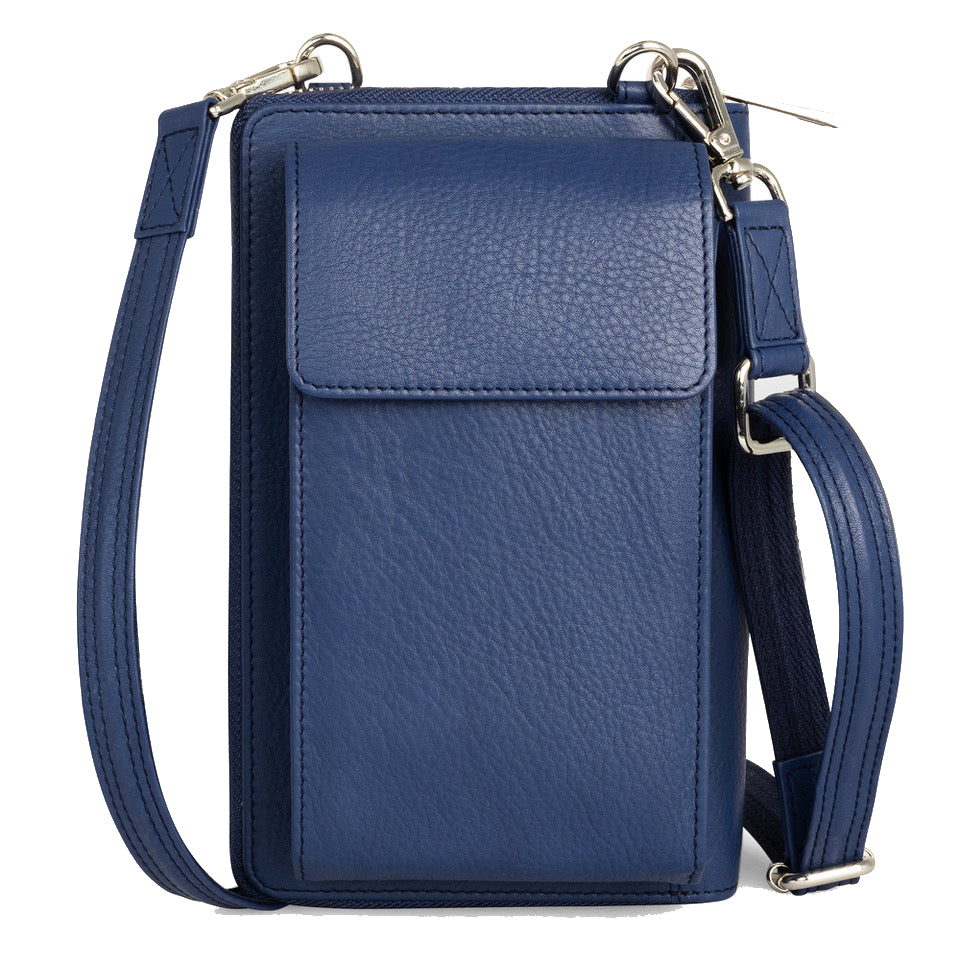
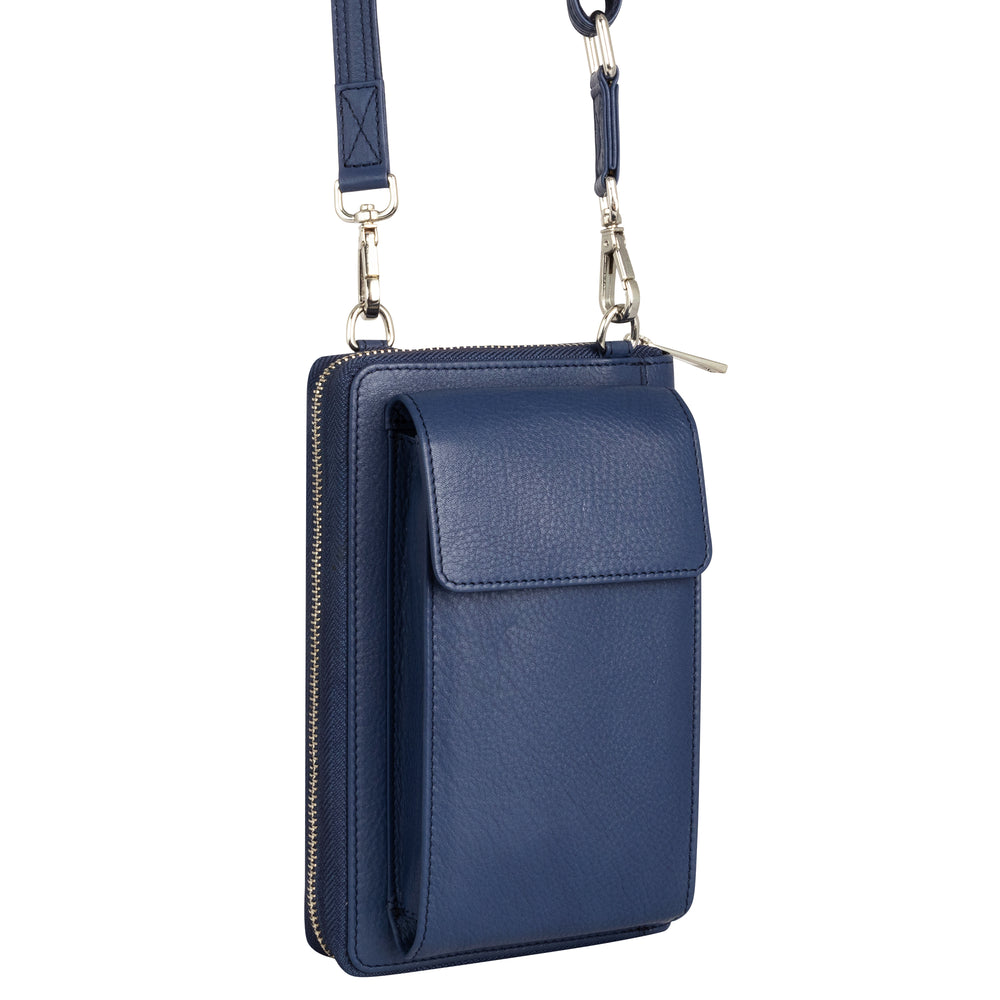
For those new to appreciating or investing in vintage leather, beginning with a foundational piece, a wallet, cardholder, or crossbody purse, sets the stage for a lifetime of character and adventure. Choose a style that fits your daily rhythm and feels good in your hand. Over time, your leather companion will soften, deepen in color, and become uniquely yours.
Classic designs like the Classic Leather Trifold or a Magnetic Money Clip Card Case with ID offer timeless style and lasting value. For more inspiration on traditional styles, check out our article on the classic trifold leather wallet style.
Frequently Asked Questions
What type of leather is vintage?
Vintage leather refers to leather that has aged naturally over many years, typically 20-30 or more, developing a rich patina and character through daily use. It is often full-grain or top-grain leather that has absorbed the stories and wear of its owner, distinguishing it from new, factory-fresh leather.
Does leather get better with age?
Yes, quality leather improves with age by developing a unique patina that enhances its softness, color depth, and durability. This transformation reflects the leather’s journey, making each piece more personal and resilient over time, unlike synthetic or fast-fashion alternatives.