

how to protect your credit card in your wallet
Understanding RFID Skimming: The Real Risk to Your Cards
Knowing how to protect your credit card in your wallet starts with understanding what you're guarding against. Most modern credit cards, debit cards, and key fobs carry RFID chips that transmit data wirelessly. A skimmer held within a few inches can silently read that data in public spaces--no contact required.
How RFID Technology Works in Everyday Cards
RFID chips respond to radio frequency signals, exchanging card numbers and expiration dates in milliseconds. Contactless payment cards, transit passes, hotel key cards--they all rely on this technology. The convenience is real. So is the exposure.
Real-World Examples of Electronic Theft
Security researchers have demonstrated skimming at crowded transit stations, hotel lobbies, and busy airports using off-the-shelf readers. One Bull Guard customer--a 56-year-old electronics developer--tested his previous RFID wallet with his own scanner and found it failed. He switched to a Bull Guard wallet and ran the same test. Solid blocking, confirmed.
Do You Actually Need RFID Protection?
If your cards display a contactless symbol, they're broadcasting a readable signal. Carry several of those cards together and you've multiplied the scanning surface. RFID protection isn't paranoia. It's a low-cost layer of security that costs nothing once it's built into your wallet--and you never have to think about it again.
Everyday Steps to Shield Your Credit Cards from Electronic Threats

Quick Fixes Like Foil and Blocker Cards: Do They Work?
Aluminum foil wrapped around a card creates partial interference, but coverage is inconsistent and the foil degrades fast with daily friction. Standalone RFID blocker cards inserted between your credit cards offer more reliable shielding within a tight stack--though they protect only the cards sitting directly next to them. The ones a slot or two away? Still exposed.
Why Dedicated RFID Wallets Outperform DIY Methods
Dedicated RFID Wallet
- Shields every card simultaneously
- No daily reassembly
- Protection withstands drops, bending, and wear
- Built into a durable, organized carry
DIY Methods (Foil / Blocker Cards)
- Inconsistent coverage across all cards
- Foil tears and degrades fast
- Blocker cards add bulk without full coverage
- Require manual repositioning
Testing Protection: Simple Ways to Check Your Setup
Hold your closed wallet near a contactless payment terminal without removing any card. If nothing registers, your shielding is doing its job. Want a more rigorous check? Use a smartphone NFC app to attempt reading your cards through the closed wallet. No read equals solid protection--which is exactly the outcome that learning how to protect your credit card in your wallet should deliver.
Preventing Physical Theft and Card Damage in Your Wallet
Tips to Avoid Pickpockets and Wallet Loss
- Carry your wallet in a front pocket rather than a back pocket in crowds
- Use a crossbody bag with a slash-proof strap in high-traffic areas
- Keep a minimal card load so your wallet stays slim and less tempting
- Consider an AirTag-compatible wallet slot for recovery if lost
Protecting Cards from Wear, Bending, and Everyday Damage
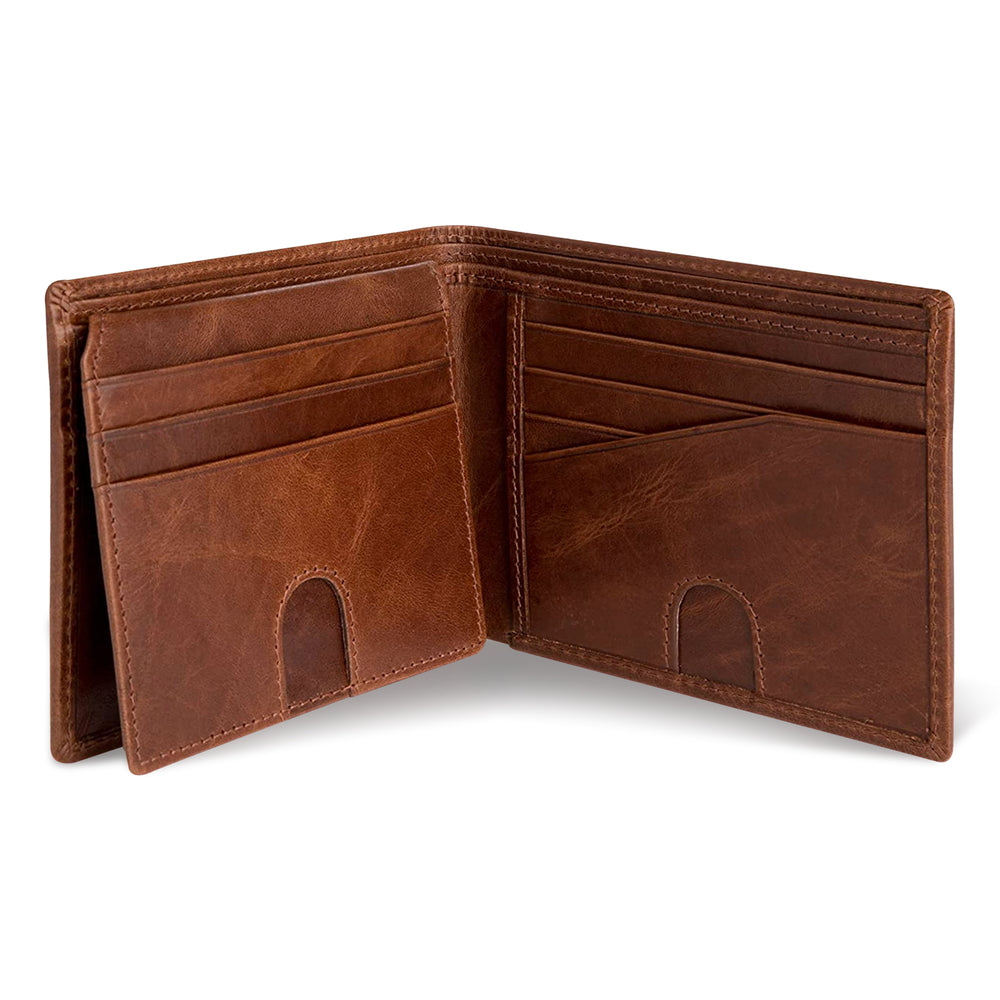
Cards crack along stress lines when a wallet's overstuffed. Firm card slots that hold each card independently prevent lateral sliding and edge wear. A dedicated ID window with a flip-up mechanism keeps your most-used card scratch-free and instantly accessible--no digging, no bending.
Choosing Wallets Built for Long-Term Durability
The wallet structure matters as much as the shielding inside it. Full-grain and top-grain leather resist compression and maintain card-slot tension over years of daily use. Cheap synthetic wallets stretch fast, loosening slots and letting cards shift around with every step. Quality stitching at stress points keeps seams from splitting--because a wallet that falls apart takes your protection with it.
For deeper insight on keeping your digital assets safe, the regulatory experts at California's Department of Financial Protection and Innovation have published solid, practical guidance worth reading.
Why Leather RFID Wallets Deliver Lasting Protection and Style
Full-Grain and Top-Grain Leather: Myths and True Quality Signs
Leather labels describe how a hide was processed--not a guaranteed quality score. Think of it like a restaurant: the cut of meat matters, but the chef, the sourcing, and the preparation determine what lands on your plate. At Bull Guard, we work with trusted tanneries and choose hides for durability, hand-feel, and long-term performance. Judge leather by how it feels and how it holds up over time, not by the label alone.
How RFID Shielding Fits Cleanly into Timeless Designs
Bull Guard embeds RFID-blocking material within the wallet's interior lining--invisible, unobtrusive, and present from day one. The slim profile stays intact. No added panels, no extra bulk. Security is part of the construction, not something bolted on afterward.
Customer Stories: Wallets That Patina with Your Adventures
One customer carried his Bull Guard wallet daily for over 18 months--back-pocket use, every single day--and said it still looked new. Another replaced a beloved 20-year-old wallet and found the same familiar layout waiting for her. These aren't just accessories. They're companions that carry your story forward. To understand the risks RFID technology carries and how skimming actually works, this overview of RFID skimming is a useful starting point.
Top Bull Guard Wallets: Secure Options for Your Lifestyle

Men's Bifold and Trifold Picks for Daily Carry
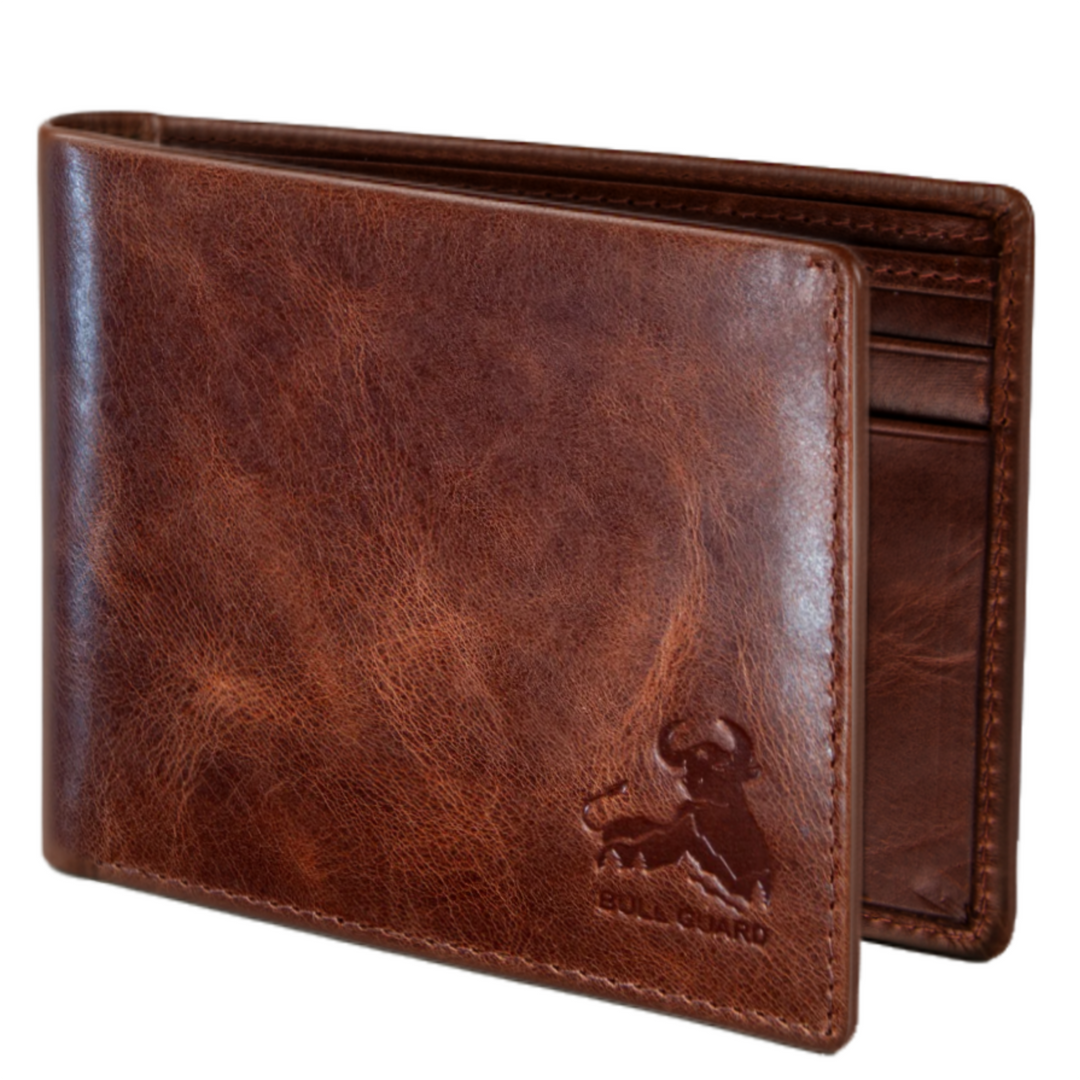
The Bifold with Flip Up ID is the flagship choice for men who want card capacity, fast ID access, and verified RFID blocking in a slim, classic design. It comes in Napa smooth black, wild buffalo brown, saffiano black, storm cloud blue, and mountain grey--and moves from the office to the trail without missing a beat. The flip-up ID mechanism keeps your most-used card scratch-free and instantly reachable.
Prefer a little more room? The Trifold Leather Wallet adds a hidden cash pocket and an optional coin compartment for days when you're carrying more. The Freedom Trifold version includes two ID windows with cut-outs--ideal for anyone juggling multiple IDs or a work badge.
Slim Cases and Women's Crossbody Purses for Versatility
The Slim Minimalist Card Case--with optional AirTag compatibility--suits front-pocket carry and frequent travelers who want RFID protection without any added bulk. It's the answer for commuters and minimalists who've already ditched the overstuffed bifold and never looked back.
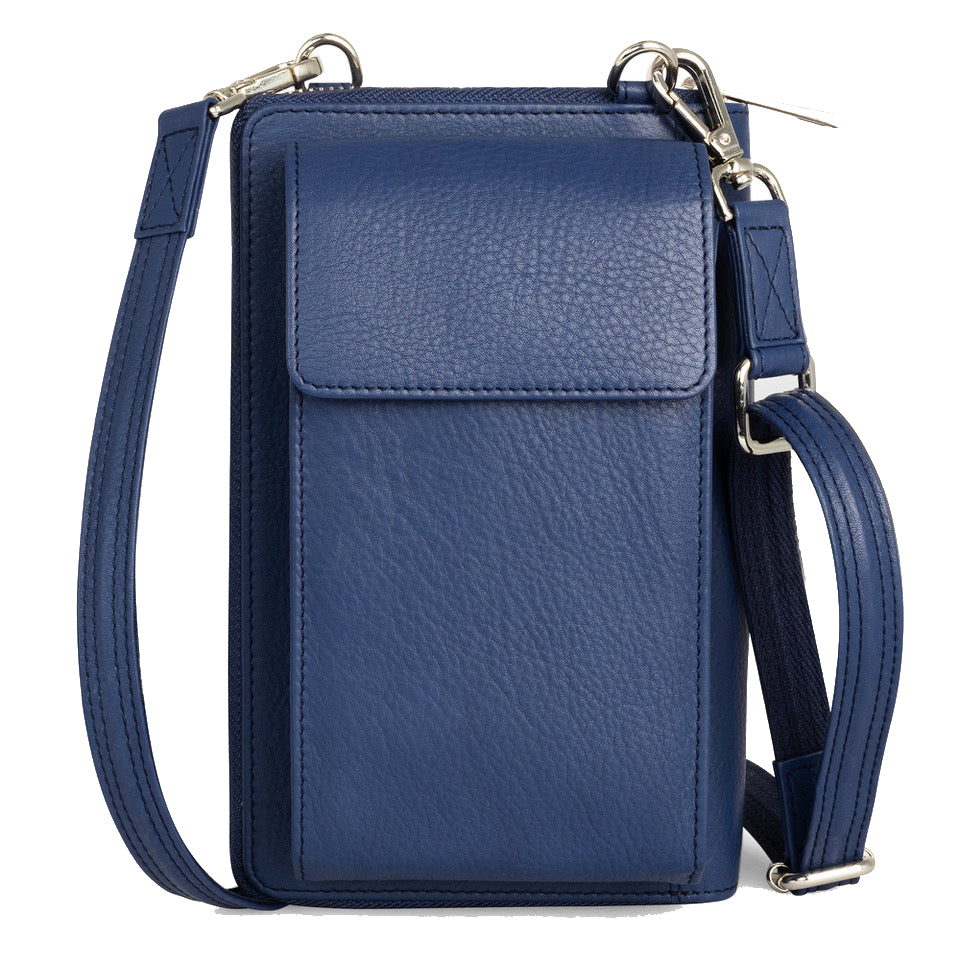
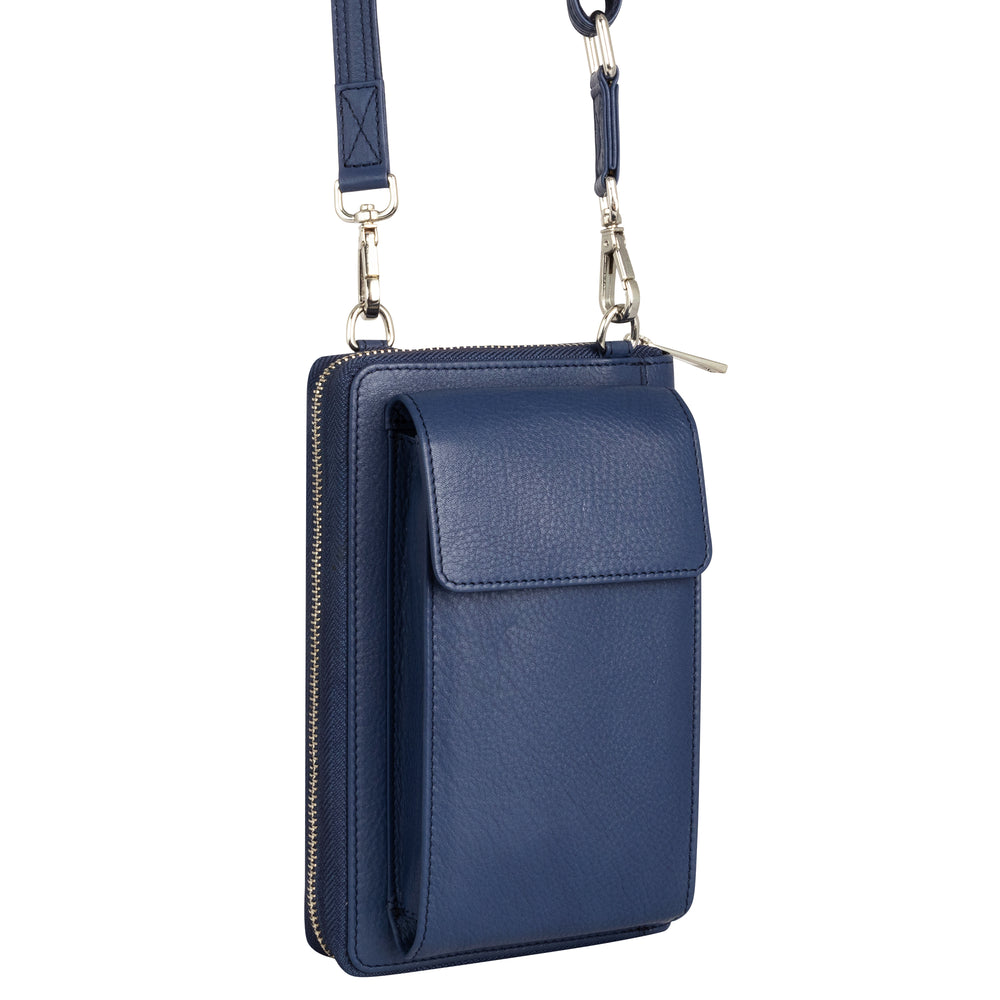
For women, the Ladies' Crossbody Leather Cell Phone Purse Wallet comes in Regular and XtraRoom sizes. A slash-proof adjustable strap, YKK zipper, and passport-ready compartments make it a genuinely hands-free option for errands, travel, and everything in between--without sacrificing style.
Colors, Styles, and Gift-Ready Choices
Every Bull Guard wallet ships in a giftable box--no extra wrapping needed. Father's Day, Christmas, a birthday that deserves something real: these wallets arrive looking like the gift they are. And once they're in someone's hands, they become a daily answer to how to protect your credit card in your wallet--quality leather, integrated RFID shielding, a design built to last for years, and a patina that only gets better with time. For broader credit card security best practices, Fidelity's ten credit card security tips are worth a read.
Frequently Asked Questions
How can I protect my credit card in my wallet?
To truly protect your credit cards, I recommend a dedicated RFID-blocking wallet. This shields your cards from electronic skimming, a silent threat in public spaces. For physical security, carry your wallet in a front pocket and choose quality leather that keeps cards secure and prevents damage.
Do RFID blocking cards actually work?
Standalone RFID blocker cards can offer some shielding when placed between your credit cards in a tight stack. However, they only protect the cards directly next to them, potentially leaving others exposed. For comprehensive security that shields every card simultaneously, a dedicated RFID wallet is a better choice.
Can aluminum foil in wallet protect credit cards?
While aluminum foil can create some interference against RFID signals, its protection is often inconsistent and degrades quickly with daily use. It's a temporary fix that doesn't offer reliable, lasting security for your cards. At Bull Guard, we believe in dependable, built-in protection that stands the test of time.
Why do modern cards need RFID protection?
Many modern credit cards, debit cards, and key fobs contain RFID chips that transmit your data wirelessly for convenience. This technology, while fast, also means your card information can be silently read by skimmers from a short distance. RFID protection is a simple, low-cost layer of security that shields these signals, keeping your personal information safe.
How to prevent your credit card from being scanned?
To prevent your credit card from being silently scanned by RFID skimmers, the most effective method is to carry an RFID-blocking wallet. These wallets have material built into their lining that blocks the radio frequency signals modern cards emit. This ensures your card numbers and expiration dates stay private, even in crowded places.
How can I check if my wallet's RFID protection is working?
You can easily test your wallet's RFID protection. Try holding your closed wallet near a contactless payment terminal without removing any card; if no transaction registers, your shielding is working. For a more thorough check, use a smartphone NFC app to attempt reading your cards through the closed wallet. No read means solid protection, giving you peace of mind.