

leather vs PU trifold RFID blocking front pocket wallet for men durable modern design which is better
# Leather vs PU RFID Wallet: Which is Better for Men?Leather vs PU: Core Differences in Material and Everyday Performance
When choosing between leather and PU for your next RFID-blocking wallet, the material defines everything. How it feels today. How it performs five years from now.
What Makes Genuine Leather Stand Out from PU
Genuine leather comes from animal hides treated through tanning. Full-grain and top-grain leathers preserve the hide's natural surface, delivering strength, breathability, and a texture that changes with you. PU (polyurethane) is a synthetic coating applied over fabric or split leather. It mimics the look at a lower cost but lacks the fiber structure that makes real leather resilient.
At Bull Guard, I work with trusted tanneries to source premium full-grain and top-grain hides selected for how they perform under daily friction, not just how they're labeled.
How Each Material Feels and Ages in Your Pocket
Leather softens and develops a unique patina. Oils from your hands and daily wear shape its character—each scratch and fold becomes part of its story.
PU? It maintains a uniform appearance at first. But it can't adapt to micro-damage. Within months, the coating begins to crack and peel, especially along stress points like folds and edges.
Breathability and Comfort for Daily Carry
Leather's porous structure allows air circulation, reducing moisture buildup in your pocket. PU's plastic coating traps heat and humidity. If you carry your wallet through commutes, hikes, or job sites, that difference matters.
| Feature | Genuine Leather | PU Material |
|---|---|---|
| Origin | Natural animal hide | Synthetic plastic coating |
| Texture Evolution | Develops rich patina | May crack and peel over time |
| Breathability | Naturally porous | Non-breathable coating |
| Repair Potential | Can be conditioned and restored | Coating damage is typically permanent |
Durability Face-Off: How Long Will Your Wallet Last?

PU's Limits: Cracking, Peeling, and Short Lifespan
Most PU wallets last three to five years before visible deterioration. The polyurethane layer bonds poorly to its base and struggles with repeated flexing. Edges fray, surfaces flake. The wallet looks worn out rather than worn in.
You get initial savings, sure. But you're buying again sooner than you'd like.
Leather's Strength: A Wallet That Ages With You
Quality leather wallets can last ten to thirty years or more. I've seen it happen. Bull Guard uses full-grain and top-grain hides that stand up to daily friction, moisture, and temperature shifts. Strong stitching reinforces stress points.
The leather grows more supple and characterful. As Reliable C. Kiehl shared: "Back-pocket daily use over 18 months, looks new."
Real-World Tests from Work, Gym, and Trails
Practical Logan, a contractor, reported months of tough use with "leather and build still fantastic." Leather handles job-site dust, gym-bag compression, and trail sweat without breaking down. PU is more likely to crease permanently, scuff through at corners, or split at fold lines under the same conditions.
RFID Blocking: Protection You Can Trust in Any Design
Why RFID Protection Matters Today
Electronic pickpocketing targets contactless credit cards and some key fobs, scanning them without physical contact. RFID-blocking technology disrupts those scans (typically around 13.56 MHz for most contactless cards).
For guys who want a trifold or front-pocket wallet with verified protection, testing matters. RFID Developer Duck ran his own scanner on Bull Guard: "blocks 100 percent."
How Material Affects RFID Integration
Both materials can house RFID-blocking liners. But leather's natural structure accommodates shielding layers without adding bulk or stiffness. PU wallets can feel rigid when lined, and if the outer coating deteriorates, protective layers may shift.
Bull Guard's Proven Shielding Across All Styles
Every Bull Guard wallet—trifold, bifold, slim card case—integrates RFID protection. Security-Focused Jeff B confirmed: "Tested, can't scan card." You get security without sacrificing the slim profile or organized layout that modern life demands.
Trifold vs Front Pocket: Finding Your Fit
Trifold Wallets: Space and Organization for Everyday Essentials
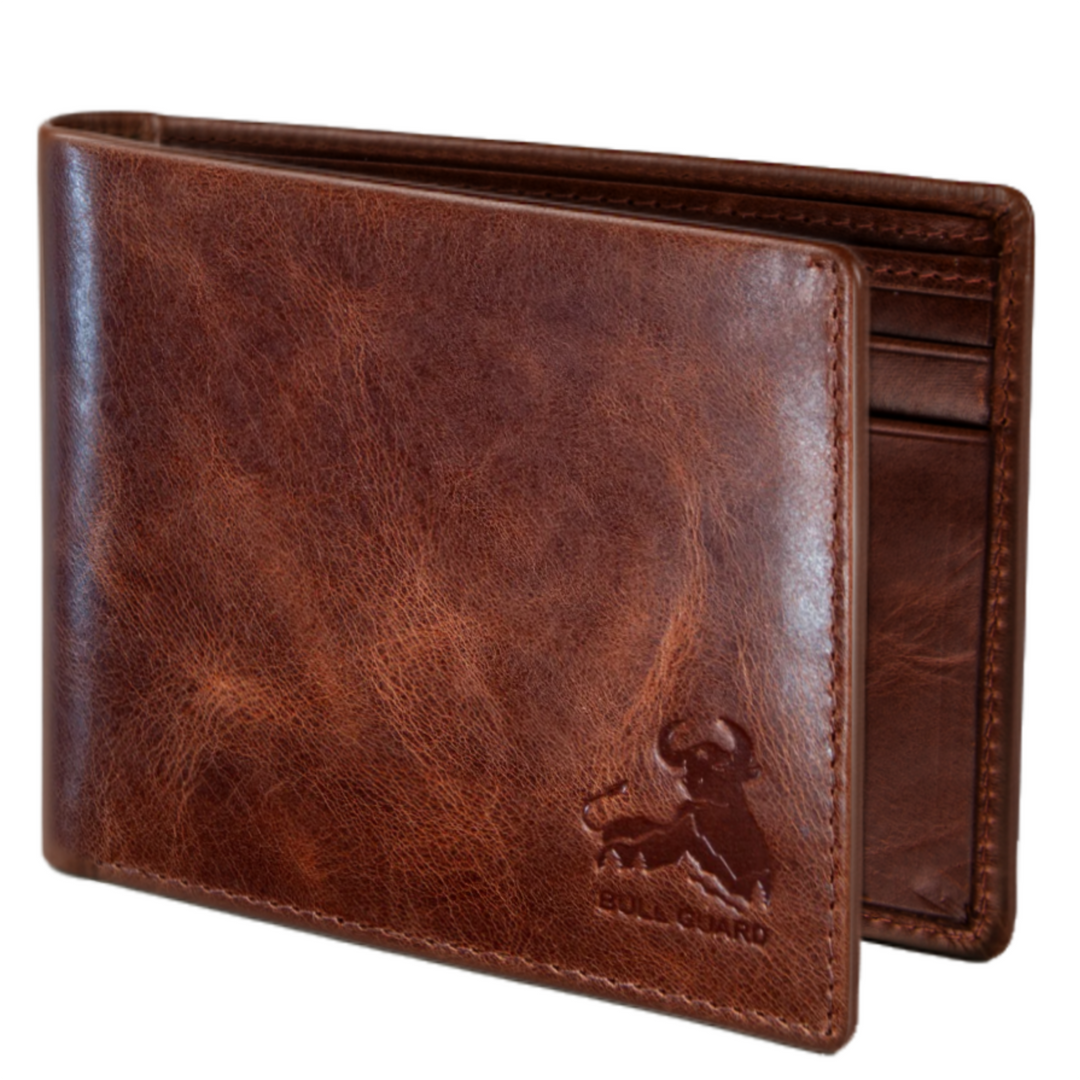
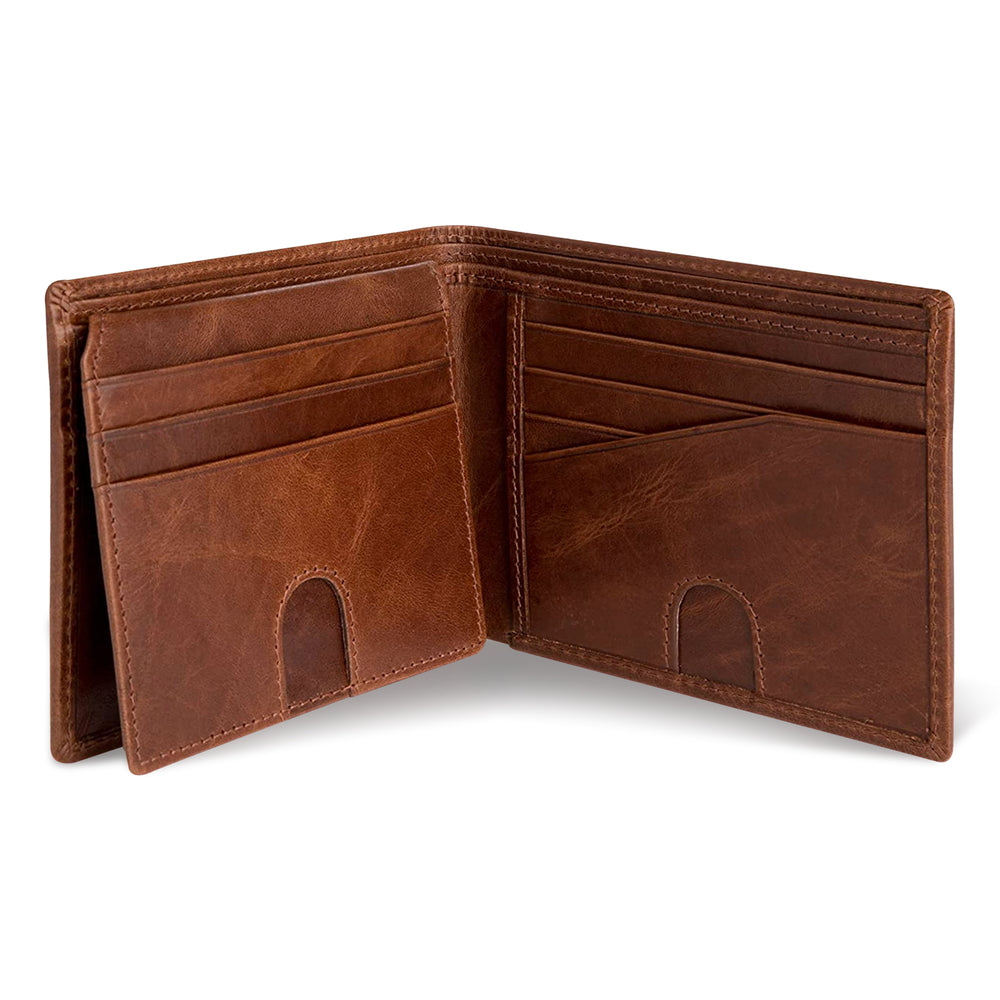
Trifold wallets work when you need room for multiple cards, IDs, and cash without juggling separate holders. Bull Guard's Classic Leather Trifold and Trifold Freedom Wallet (with dual ID windows and thumb cutouts) give you card slots, a hidden pocket in the cash compartment for an AirTag or emergency bills, and RFID protection across every slot.
The three-panel fold keeps everything visible at a glance. You're not digging during checkout or security checks. Men over 30 often prefer the classic layout, while the hidden pocket adds a modern tracking feature. PU trifolds can mimic the structure but lack the suppleness that lets leather versions slim down as they break in—synthetic materials stay stiff, creating pocket bulk that doesn't ease over time.
Front Pocket Wallets: Slim, Secure Carry
Front pocket carry reduces back-pocket bulk and keeps your wallet easier to monitor in crowds. Bull Guard's Slim Card Case and Slim Bifold wallets (both with optional AirTag slots) hold cards plus folded bills in a profile thin enough for a shirt pocket.
Here's where material choice really shows up: full-grain hides compress and conform to your card stack within days. PU stays rigid and may crack at stress points when you sit or bend. Front-pocket fans like On-the-Go Alex and Streamlined Joye confirm the AirTag slot stays secure and the back slots widen just enough for quick access—a balance synthetics struggle to match.
Modern Features Built Into Durable Designs
Today's wallets include thumb push-slots for one-handed card retrieval, removable inserts for minimalist days, and AirTag compartments for tracking. I build these features into leathers like Napa, Crazy Horse, and Buffalo, which soften around the mechanisms so zippers glide and cutouts don't fray.
You can choose the iconic Bull logo, eagle, snake, or a brandless finish. Colors from forest brown to dark blue let you match your gear or stand out. PU versions may offer similar features on paper but degrade faster under daily friction: stitching loosens, synthetic coatings peel near high-use areas like card slots, and the material can't keep up with an active routine.
Trifold Pros
- Maximum card and cash capacity in organized panels
- Hidden pocket for AirTag or emergency storage
- Classic layout familiar to men 30+
Trifold Cons
- Slightly thicker in pocket than minimalist designs
- Needs a brief break-in period for a slimmer feel
Front Pocket Pros
- Reduces back-pocket bulk and easier to monitor in crowds
- Ultra-slim for shirt or front jeans pocket
- Quick single-hand card access
Front Pocket Cons
- Limited capacity (often 4–8 cards)
- Cash must be folded or carried separately
Cost, Care, and True Value Over Time

Upfront Price vs Long-Term Investment
PU wallets often start around $15 to $25. Quality leather trifolds and front pocket wallets commonly range from $30 to $60.
Do the math: spread a $30 leather wallet over ten years and you're paying about three dollars per year. A $20 PU replacement every three years costs closer to seven dollars annually—plus the hassle of transferring cards and breaking routines.
Bull Guard customers like Reliable C. Kiehl report wallets looking new after 18 months of back-pocket carry. Classic Kevin notes his bifold remains soft yet sturdy with easy card pull-outs. The investment calculation favors leather not just in lifespan but in sentimental value: a patina-rich wallet tells your story. Discarded PU just adds to landfill waste.
Simple Care to Keep Your Wallet Strong
Leather thrives with minimal attention. Wipe dust with a dry cloth weekly. Apply a thin coat of leather conditioner every six months to preserve suppleness. Avoid prolonged water exposure (though Bull Guard's dense grain handles light rain just fine). Store it in a cool, dry spot when not in use.
PU requires only surface cleaning but offers no long-term maintenance benefits—a coating will still crack over time. Leather rewards you: each conditioning session deepens color and supports the fibers, turning routine care into a habit that extends years of carry.
Why Men Choose Bull Guard
RFID Developer Duck ran scanner tests and confirmed Bull Guard blocks 100 percent of attempts. He praised the dual bill pockets and thumb-push slots. Gifting Jack's green wallet draws compliments and stops his Tesla key card cold—he's buying more as gifts. Caring Poontai finally replaced her husband's 20-year Timberland with a Bull Guard that matched the beloved color, size, and setup.
These stories share a thread: guys want wallets that work quietly, age beautifully, and respect their investment. I built Bull Guard around that promise—full-grain and top-grain leathers chosen for feel and durability, stitched to hold up in city commutes and weekend trails, designed to help you carry life boldly every single day.
The Bottom Line: Leather wallets cost more upfront but deliver a longer lifespan, develop character through patina, and integrate RFID blocking without sacrificing flexibility. For guys who value durability, comfort, and a wallet that changes with their story, full-grain or top-grain leather is the better pick.
Which Wallet Is Right for You? Recommendations by Lifestyle
Everyday Professionals and Commuters
If you move between office, transit, and errands, a leather bifold or trifold with RFID protection keeps cards organized and secure without adding bulk. Bull Guard's Bifold with Flip Up ID or Trifold Freedom Wallet fits cards, offers quick access at turnstiles or checkout, and the leather compresses as it breaks in so your pocket profile stays clean.
PU versions feel stiff in dress pants and may crack at fold lines with daily pressure. Best for guys 30 to 65 who carry multiple cards and want a wallet that looks better with time.
Active Adventurers and Frequent Travelers
Trails, gyms, airports, and road trips demand a wallet that can handle sweat, weather shifts, and constant handling. Leather breathes and stands up to moisture better than coated PU in day-to-day use. It's less likely to peel when exposed to temperature swings or packed in a duffel.
Bull Guard's Slim Bifold with removable insert lets you carry the full wallet on travel days and slip out just two cards plus two IDs for a run or beach trip. Compare a season of heavy use: PU cracks, leather develops a rugged patina that tracks your miles. Ideal if you don't baby your gear.
Minimalists and Front Pocket Fans
Carrying only essentials? Every millimeter counts. Bull Guard's Slim Card Case (with or without AirTag slot) holds cards and folded bills in a profile thin enough for a shirt pocket. The full-grain leather molds to your card stack within a week.
PU stays rigid, presses into your leg when you sit, and the synthetic coating may flake at edges under friction. Front pocket carry keeps your wallet out of the way; leather makes it easier to wear all day. Best for guys 25 to 50 who value speed, security, and a wallet that stays slim.
Gift Givers and Quality Seekers
Buying for someone else or treating yourself to an upgrade? Presentation and longevity matter. Bull Guard wallets arrive in magnetic gift boxes with tissue wrap and a thank-you card. The genuine leather aroma signals quality the moment the box opens.
Customers like Thoughtful Mary and Great Shopper Jazlynn call out the premium unboxing and craftsmanship that rivals big-name brands at a fraction of the price. A leather wallet can become a keepsake. A PU wallet gets tossed and forgotten. Choose leather when the relationship or occasion deserves something that lasts. Explore our Beyond Brown Gift Favorites collection for standout options.
Looking Ahead: How Your Wallet Choice Shapes Your Daily Carry
The wallet you carry isn't static.
Leather evolves with you—darkening in sun-exposed spots, softening where your thumb pushes cards, creasing along the folds you use most. In five years, your Bull Guard wallet will look different from anyone else's because it reflects your routines, travels, and habits. PU looks the same as the next one until it cracks and you replace it.
As tracking tools advance, wallets with AirTag slots and RFID blocking will become more common. Leather is better suited to house those features for the long haul. There's also the environmental angle: one leather wallet replacing several PU throwaways reduces waste and honors the craft behind a product built to last.
The debate between materials extends beyond your pocket to the story your gear tells and the confidence that comes from carrying something truly yours. At Bull Guard, that's the point: choose a wallet that grows with you, protects what matters, and helps you carry life boldly.
Frequently Asked Questions
What is the best material for a man's wallet?
For a man's wallet, I believe genuine leather, especially full-grain and top-grain, stands above the rest. It offers unmatched durability, breathability, and develops a unique character, a rich patina, over years of daily adventures. At Bull Guard, we choose these premium hides to ensure your wallet becomes a true companion, not just an accessory.
Are leather wallets RFID safe?
Absolutely, when crafted with purpose. While leather itself isn't inherently RFID-blocking, we at Bull Guard integrate advanced shielding technology into every one of our genuine leather wallets. This means your cards are protected from electronic pickpocketing, letting you carry your life boldly with peace of mind.
What is the most durable type of wallet?
From my experience, a wallet made from genuine, high-quality leather is by far the most durable. Unlike synthetic materials that crack and peel, premium full-grain and top-grain leather from Bull Guard is designed to withstand years, even decades, of daily use. It grows more supple and characterful with time, telling your story through its evolving patina.
What are the best RFID wallets for men?
The best RFID wallets for men combine reliable protection with enduring style and practicality. At Bull Guard, we offer a range of genuine leather trifold, bifold, and slim front pocket wallets, all integrated with verified RFID blocking. They are designed for the modern man who demands security without sacrificing a durable, modern design.
Are leather wallets better than PU wallets?
For me, and for the spirit of Bull Guard, genuine leather wallets are undeniably better than PU. Leather offers a tactile experience that improves with age, developing a unique patina and adapting to your life. PU, while initially mimicking leather, lacks its resilience, often cracking and peeling within a few years, making it a fleeting choice compared to leather's lasting strength.