

hand tooled leather
What Is Hand Tooled Leather?
Hand tooled leather is vegetable-tanned hide that an artisan carves, stamps, and shapes by hand using metal tools to create raised, three-dimensional patterns. No two pieces are identical. The result is a functional object that carries the maker's skill in every cut.
The Craft Behind the Patterns
An artisan dampens the hide, then presses swivel knives and beveling stamps into the surface to push fibers apart rather than cutting them. Those displaced fibers hold their new position as the leather dries, locking the design permanently into the grain. The craft demands patience: a single hand tooled leather belt can take several hours to complete.
History and Roots in Tradition
Leather tooling traces back thousands of years across North Africa, the Middle East, and medieval Europe. Spanish settlers carried the tradition into the American Southwest, where it fused with Native American and Mexican artisan styles to produce the bold floral and geometric patterns now synonymous with western tooled leather goods.
Why Vegetable-Tanned Leather Fits Best
Vegetable tanning uses natural plant compounds to firm the hide's fibers, giving the leather the density needed to hold a stamped impression cleanly. Chrome-tanned leather stays too soft and springy; tool marks blur or disappear as the hide relaxes. For any hand tooled leather purse, wallet, or belt, vegetable tanning is the foundation that makes lasting detail possible.
Artisan note from Marcela: Think of the tannery as the chef and the hide as the ingredient. The grade printed on a label tells you less than the feel in your hands. At Bull Guard, we specify hides selected for density, hand-feel, and long-term performance--because those qualities determine whether a design stays sharp after years of daily carry.
How Hand Tooled Leather Is Made: Step by Step

Step 1: Casing and Prep
The artisan submerges or sprays the vegetable-tanned hide until it reaches a consistent dampness called "casing." At this moisture level, leather fibers become temporarily pliable enough to accept tool impressions without cracking. Timing matters: too wet and marks blur; too dry and the hide resists the stamp entirely.
Step 2: Outlining and Cutting
Using a swivel knife, the artisan traces the pattern directly onto the damp surface. The knife rotates on its barrel, allowing fluid curves and tight corners without lifting the blade. These cuts are shallow guides, not decorative lines--they define where beveling tools will later push fibers downward to create depth and shadow.
Step 3: Stamping, Shaping, and Finishing
A mallet drives beveling stamps, camouflage tools, and background texturizers along each cut line. Each strike displaces fibers laterally, building the raised, three-dimensional relief that defines hand tooled leather. Once the design is complete, the artisan applies leather dye for color, an antique finish to deepen shadows, and a protective conditioner to seal the surface.
Hand Tooling vs. Machine Embossing
| Feature | Hand Tooled | Machine Embossed |
|---|---|---|
| Pattern source | Artisan skill, one piece at a time | Mechanical press, repeated identically |
| Leather type required | Vegetable-tanned, firm density | Any tanned hide |
| Design depth | True three-dimensional relief | Shallow surface impression |
| Uniqueness | Every piece differs slightly | Uniform across production run |
| Time per piece | Hours to days | Seconds to minutes |
| Patina over time | Deepens; design stays sharp | Pattern can flatten with wear |
What Sets Hand Tooled Leather Apart from Regular Leather
Key Differences in Materials and Process
Most leather goods use chrome-tanned hides finished with surface coatings. Production is fast, and the result is soft and uniform. Hand tooled leather starts with a firmer, denser hide and then receives hours of individual attention. The surface isn't coated to hide imperfections; it's worked to reveal them as character. That distinction shows clearly in how each piece ages.
Tooling vs. Carving: What's the Difference?
Tooling uses stamps driven by a mallet to compress and texture the leather surface. Carving combines swivel-knife cuts with stamp work to create deeper, more sculptural relief. A hand tooled leather belt featuring a floral western pattern typically uses both techniques together--the swivel knife defines the flower petals while beveling stamps lift them off the background. For a deeper look at tooling methods, the Wikipedia entry on leather tooling is a solid starting point.
Full-Grain and Top-Grain: Beyond the Labels
Full-Grain Leather
- Retains the entire grain layer for maximum fiber density
- Develops a rich patina that deepens over years of use
- Best suited for tooling because fibers hold impressions firmly
- Natural markings tell the story of the original hide
Top-Grain Leather
- Surface is lightly sanded for a more uniform appearance
- Slightly more pliable, making it ideal for structured purses and wallets
- Still accepts tooling well when vegetable-tanned correctly
- Tannery skill determines final performance more than the label alone
Labels describe processing, not absolute quality. A top-grain hide from a skilled tannery will outlast a poorly processed full-grain hide. At Bull Guard, we judge by feel, fiber density, and long-term performance rather than grade alone. The Leather Naturally industry reference covers this in more depth for anyone who wants to go further.
Benefits of Hand Tooled Leather for Everyday Carry
Durability, Patina, and Unique Character
Vegetable-tanned leather stiffens slightly with age, then softens to the exact shape of its owner's use. A hand-tooled leather wallet carried daily for two years tells a visible story: deepened color in high-contact zones, a slight curve matching the back pocket, tooled patterns that grow sharper in contrast as the background darkens. That evolution can't be manufactured or rushed.
Real-World Use: Work, Outdoors, and Gifts
A hand tooled leather purse handles trail dust and city rain with equal composure. The dense fiber structure resists abrasion far better than coated alternatives. For gifting, tooled leather carries real emotional weight--it signals that someone chose a lasting object rather than a disposable one. Recipients remember the gift years later because the piece still looks great.
Bull Guard's Take: RFID Protection Meets Timeless Tooling
Carrying a beautifully tooled wallet means nothing if your card data gets skimmed at the checkout line. Bull Guard integrates RFID-blocking technology into every wallet and crossbody purse, pairing artisan aesthetics with electronic security. For those who want to go further, the Premium Faraday Box with 2 Faraday Pouches extends that same protection to keyless entry fobs--blocking relay attacks that thieves can execute in seconds. For anyone interested in the craft side of things, The Crucible's leatherworking guide is worth a read.
Hand Tooled Leather in Wallets and Purses: Bull Guard Examples

Men's Bifold and Trifold Options
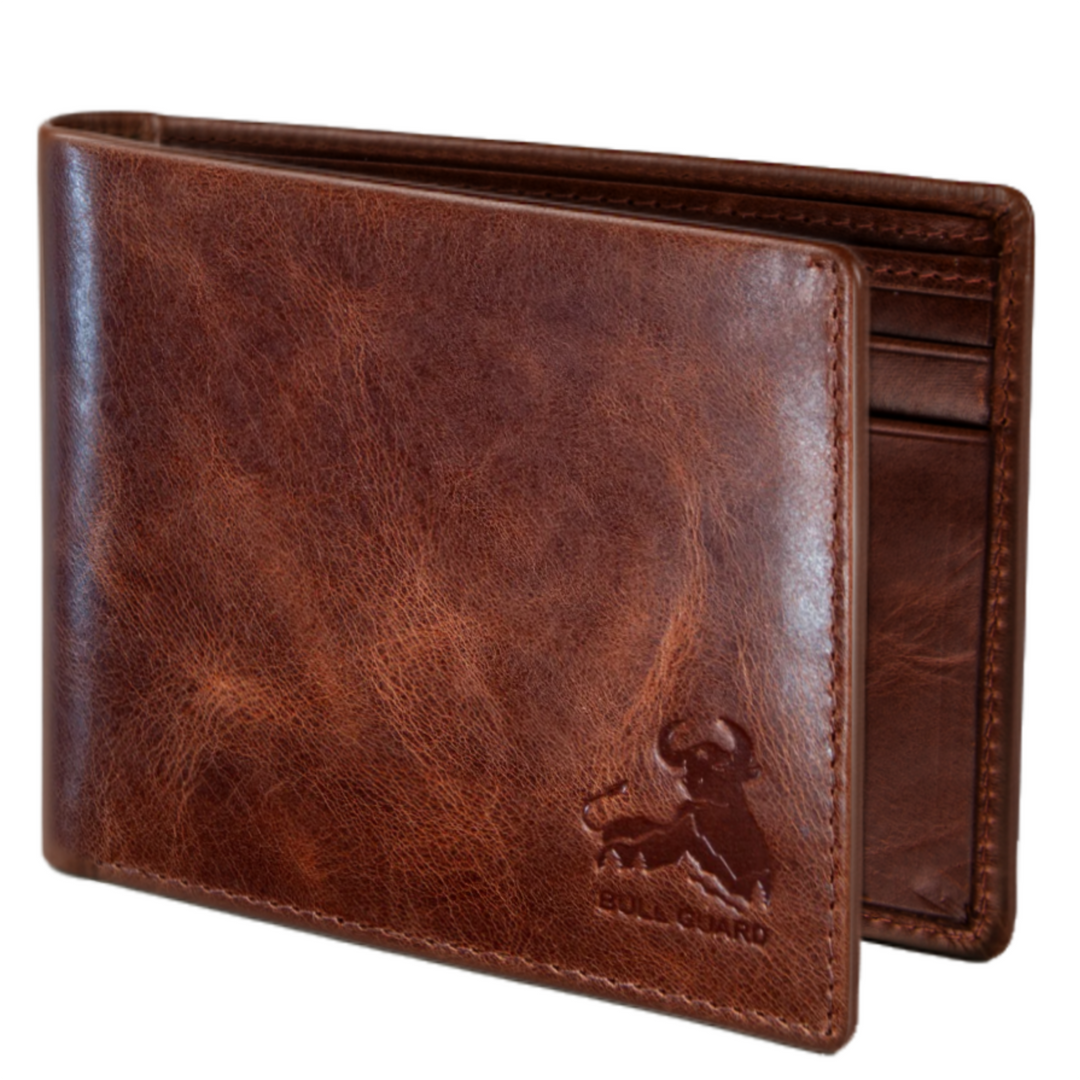
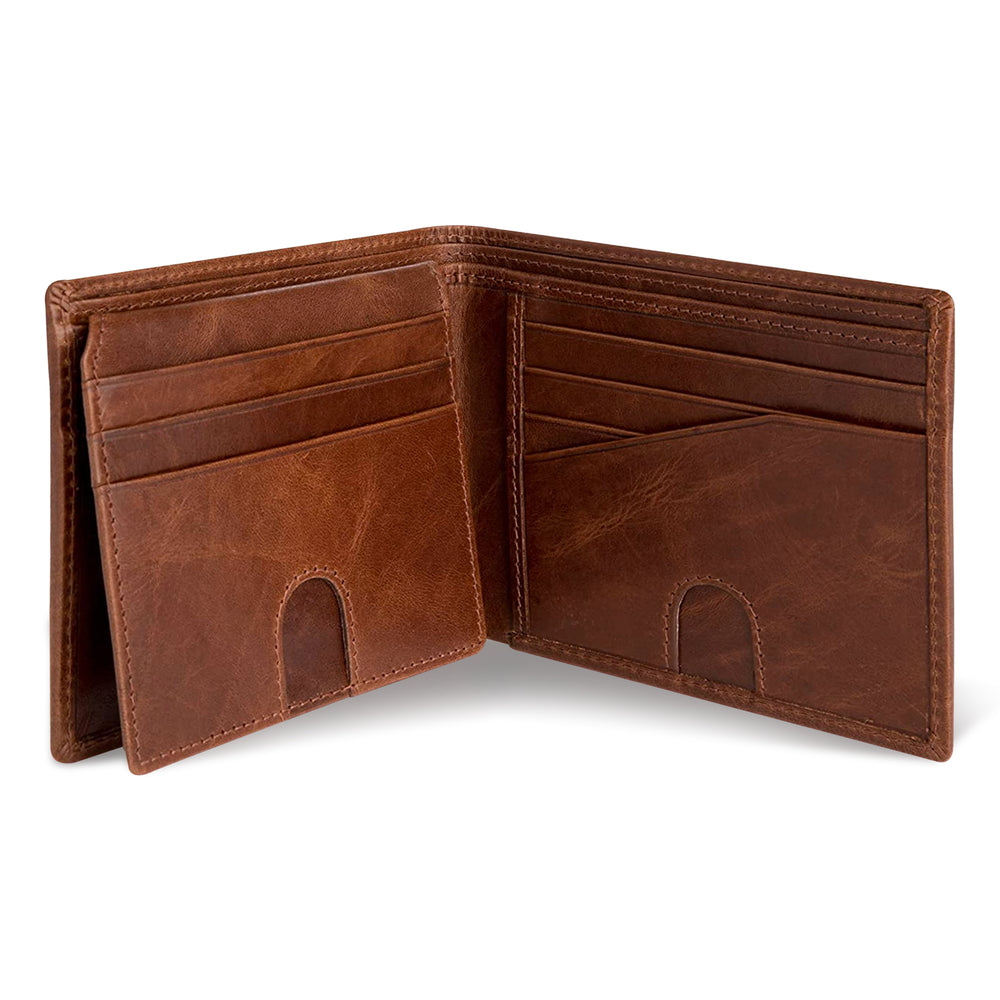
The Bifold with Flip Up ID suits daily carry for men who want fast ID access without pulling the wallet out entirely. The Freedom Trifold adds a second ID window and a hidden cash-compartment pocket sized for an AirTag tracker. Both lines feature thumb-push card slots and are available in Crazy Horse, Buffalo, and other premium finishes that tool and age beautifully.
Women's Crossbody Cell Phone Purses
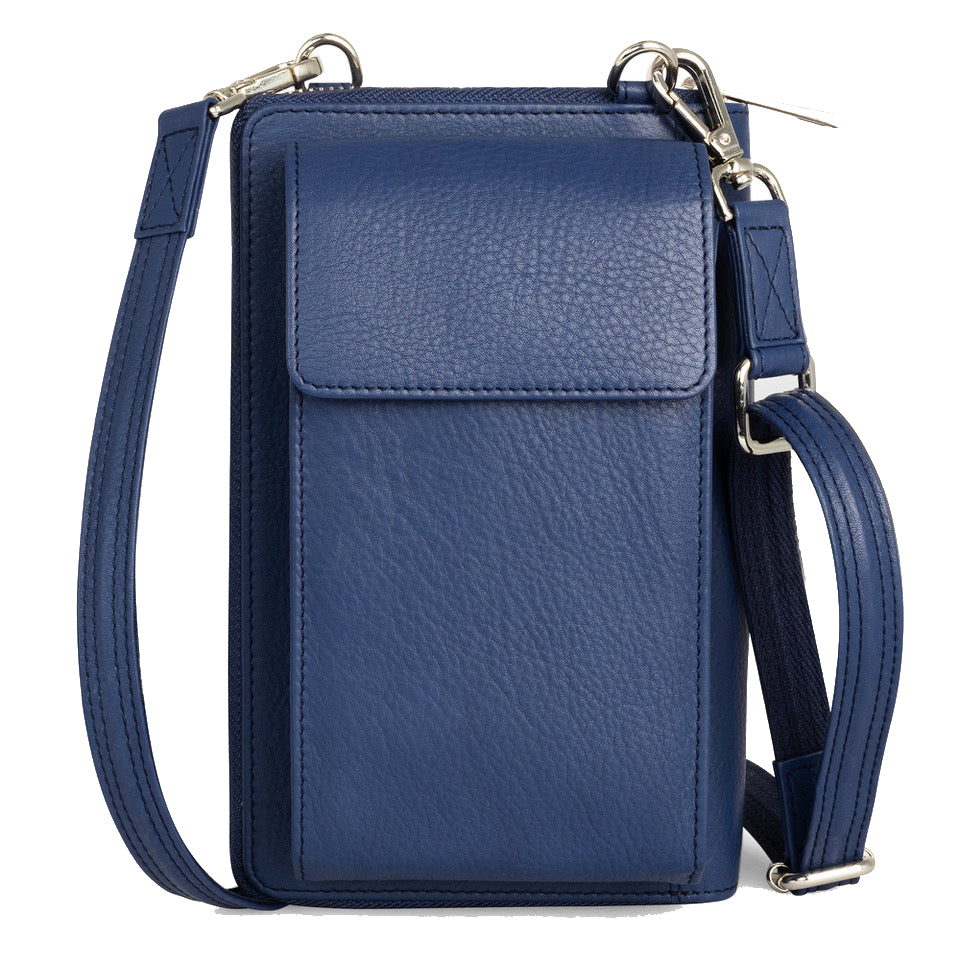
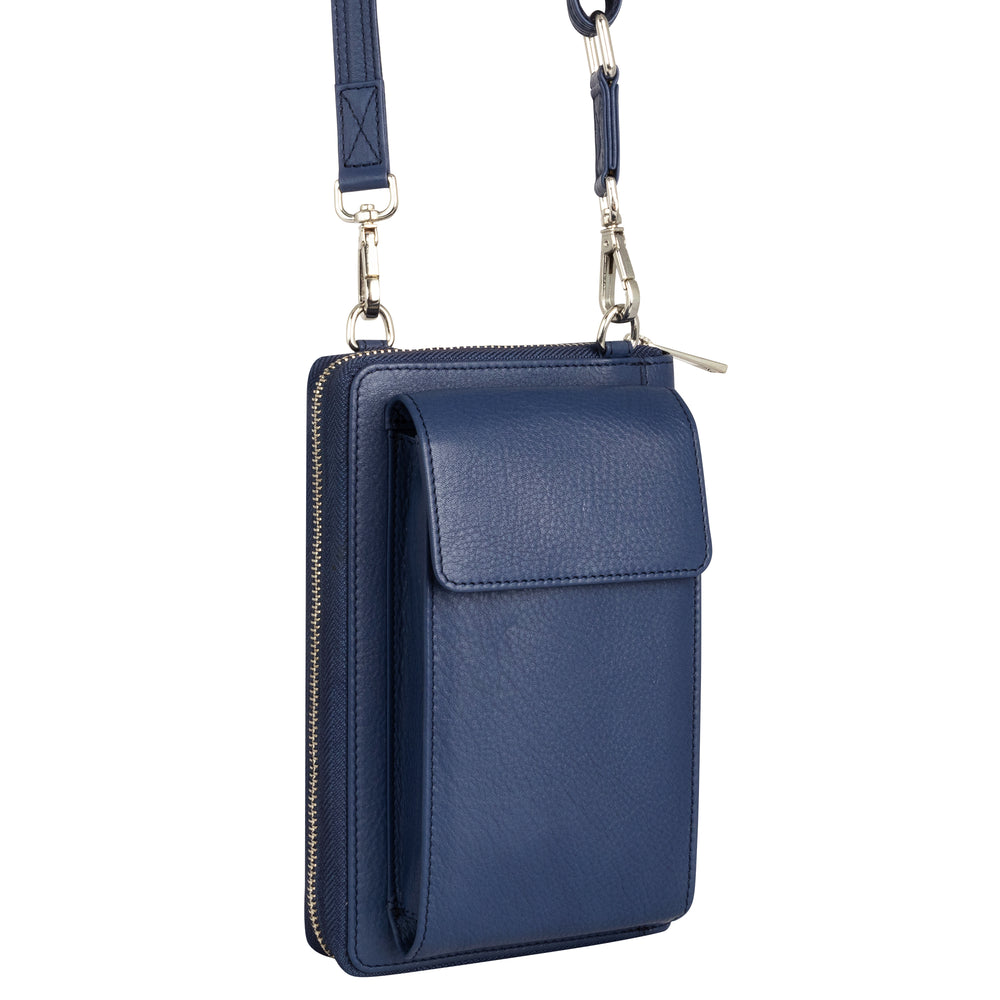
The Ladies' Crossbody Leather Cell Phone Purse ships in Regular and XtraRoom sizes, both passport-compatible for travel. The slash-proof, fully adjustable strap fits any height, and the YKK zipper runs smoothly through years of daily use. RFID blocking is built in, so cards stay protected whether the purse is on a hiking trail or at a dinner table. See the XtraRoom Crossbody for those who want a little extra carrying capacity.
Customer Stories: Patina in Action
Reliable C. Kiehl carried his Bull Guard bifold in his back pocket every day for eighteen months and reported it still looked new. Leather-Loving Ryan said the scent was better than a new car. These aren't outliers--they reflect what vegetable-tanned, well-constructed leather does over time when the tannery and the maker both care about the outcome.
How to Care for Hand Tooled Leather Goods
Daily Cleaning and Conditioning Tips
- Wipe the surface with a slightly damp cloth after exposure to dirt or sweat. Never saturate the leather.
- Apply a thin coat of leather conditioner every two to three months. Buff gently with a soft cloth to feed the fibers without clogging the tooled grooves.
- Store the piece away from direct sunlight when not in use. UV exposure fades dye and dries out fibers faster than daily carry does.
Preserving Patina Without Fading Designs
Use conditioners formulated for vegetable-tanned leather. Heavy wax-based products can fill tooled impressions and flatten the three-dimensional relief over time. A light neatsfoot oil or leather balm applied sparingly feeds the hide while keeping stamped patterns crisp and readable.
Common Mistakes to Avoid
Heat sources dry tooled leather unevenly, causing cracks along stamp lines. Never dry a wet hand tooled leather belt or purse near a radiator or in direct sunlight. Silicone-based sprays do repel water, but they seal the surface and block the natural patina process--the very thing that makes each piece one of a kind over time.
Carry It Boldly: Your Hand Tooled Leather Guide in Brief
Hand tooled leather rewards patience: from the artisan who cases and stamps each hide, to the owner who conditions and carries the finished piece for years. The craft is honest. The material responds to care and use in ways that mass-produced goods simply can't replicate.
At Bull Guard, that philosophy runs through every wallet, crossbody purse, and accessory we design. RFID blocking protects your cards; quality leather protects your investment over time. Choose pieces built to last. Care for them consistently. Let the patina tell your story.
Frequently Asked Questions
What is hand tooled leather?
For me, hand tooled leather is where true artistry meets raw hide. It's vegetable-tanned leather that an artisan carefully carves and stamps by hand, using metal tools to create beautiful, raised patterns. Each piece is unique, carrying the maker's skill and spirit, ready for you to carry life boldly.
Is tooling leather real leather?
Absolutely, tooling leather is very much real leather. We at Bull Guard use only genuine vegetable-tanned hide, which is the perfect foundation for lasting detail. This natural material allows the artisan's work to truly shine and hold its form for years.
What does tooled leather mean?
Tooled leather means that skilled hands have used specialized stamps and mallets to press patterns into the leather's surface. This process displaces the leather fibers, creating a textured, dimensional design that becomes a permanent part of the hide. It's a testament to patience and precision, crafting a story into every piece.
What is the lowest quality of leather for tooling?
For us at Bull Guard, quality isn't just about a label, it's about the feel and performance. Leather that is chrome-tanned or poorly processed won't hold the deep, lasting impressions of hand tooling. We always prioritize hides selected for density and long-term performance, because that's what truly matters for a piece that will carry life boldly.
How durable is tooled leather?
Hand tooled leather is incredibly durable, truly built to last. Because it starts with dense, vegetable-tanned hide, the patterns are locked permanently into the grain, staying sharp even after years of daily carry. It develops a beautiful patina over time, softening to your unique touch and telling your story, ready to unleash the untamed Bull within.