

card wallet size
Card Wallet Size Guide: Find Your Perfect Fit (2026)
Choosing the right card wallet size starts with understanding the exact dimensions your cards demand. Whether you carry four essentials or fourteen cards, the right fit transforms daily carry from fumbling through pockets into grabbing what you need without thinking.
Standard credit cards measure 3.37" × 2.125" (8.56 cm × 5.4 cm), following the CR80 international standard that governs card production worldwide--from American Express to European bank cards to Japanese transit passes. Your ideal wallet size depends on your daily card count, where you carry it (front pocket, back pocket, or bag), and whether you need space for bills, ID windows, or an AirTag. Bifold wallets hold 8-12 cards comfortably, trifolds organize 12-18, and minimalist card cases manage 4-8.
Standard Card Wallet Size: What You Actually Need to Know
Credit card dimensions and why they matter
Every credit card, debit card, driver's license, and most ID cards share identical dimensions: 3.37 inches wide by 2.125 inches tall by 0.03 inches thick. This CR80 specification means your wallet must fit these measurements without forcing cards to bend or stick during daily use. Quality wallets add minimal material around each slot while maintaining structural integrity--you feel the difference when cards slide out smoothly instead of catching on cheap plastic or overstuffed leather.
Common wallet size misconceptions
Many buyers assume slimmer automatically means fewer cards. Not true. Well-designed card slots fit standard dimensions from day one, with premium leather softening to your specific card stack within days--not weeks.
Another myth? RFID-blocking material adds bulk. Modern RFID protection integrates into slim profiles without compromising pocket comfort or card capacity. I've seen customers test Bull Guard wallets with professional scanners and confirm complete blocking while maintaining a profile barely thicker than the cards themselves.
Size Reality Check: A credit card occupies 7.16 square inches of surface area. Your wallet's footprint should add no more than 0.5 inches to each dimension for comfortable carry--an ideal bifold measures roughly 4" × 3" when closed.
Wallet Types and Their Card Capacity: Finding Your Fit

Bifold wallets: the balanced everyday choice
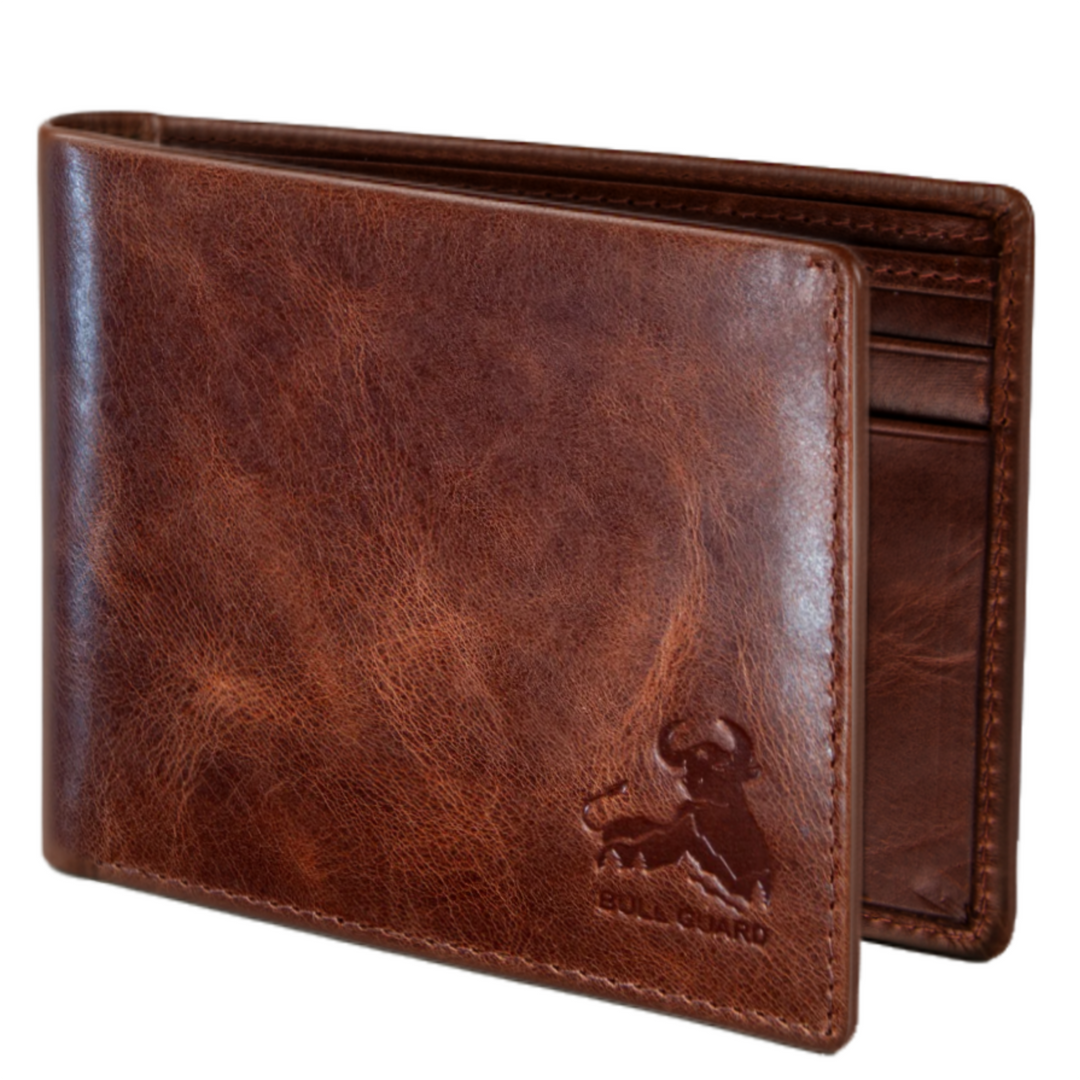
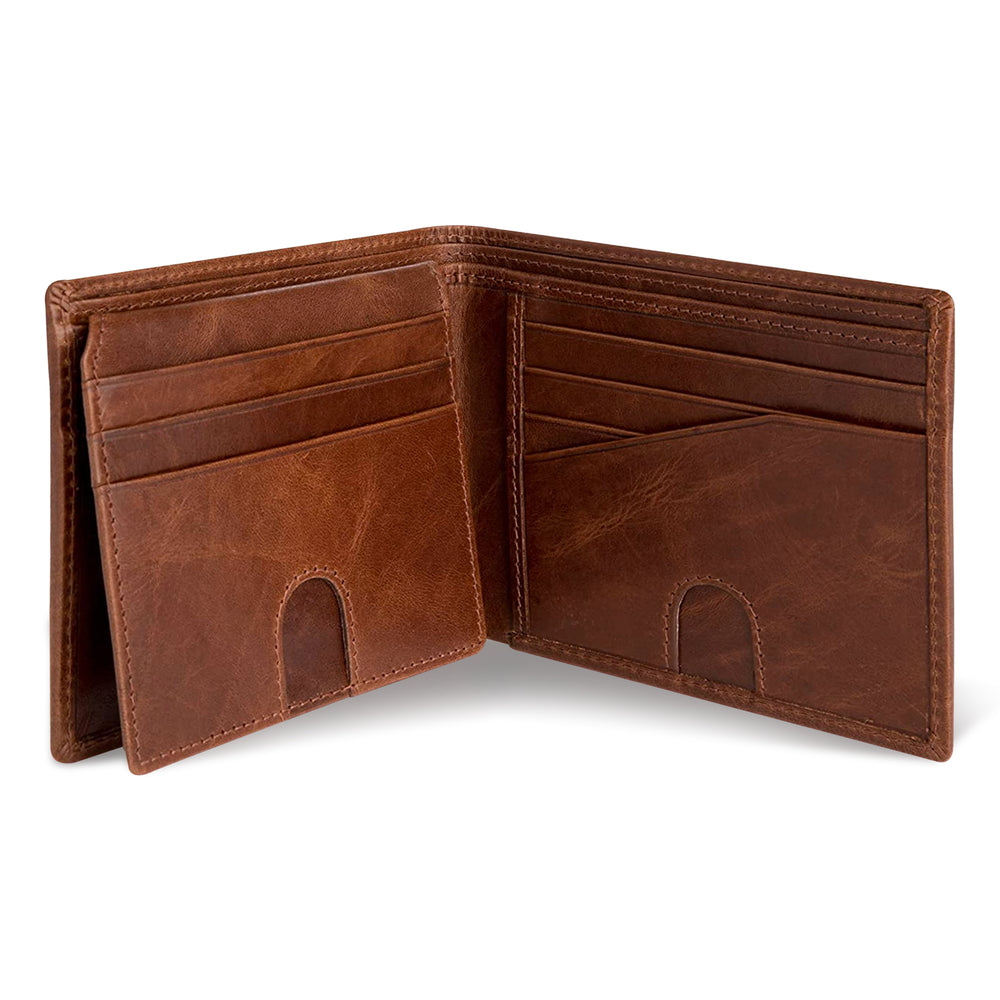
Bifolds fold once down the middle, creating two halves with card slots on each side. Most hold 8 to 12 cards across four to six slots, plus a bill compartment and often an ID window. This configuration fits back pockets naturally and distributes thickness evenly.
Bull Guard's bifold with flip-up ID keeps your license accessible without digging through stacked cards, while thumb-notch cutouts let you push cards up for quick selection. It's the style that works for most people, most days.
Trifold wallets: maximum organization in a compact footprint
Trifold designs fold twice, creating three panels that stack when closed. This layout fits 12 to 18 cards in dedicated slots, multiple ID windows, and even a secret pocket in the cash compartment for an AirTag or emergency bill.
The Freedom Trifold offers two ID windows with cutouts--no need to remove cards for verification. Trifolds suit professionals who carry business cards, insurance cards, and multiple payment options without resorting to overstuffed chaos.
Minimalist card cases and slim wallets for light carry
Card cases and slim bifolds strip away bulk, holding 4 to 8 cards in a profile thin enough for front-pocket carry or shirt pockets. Side pockets handle folded bills, and some models include an AirTag slot for tracking.
These designs work best when you've edited your daily carry down to essentials: one or two payment cards, ID, insurance card, maybe a transit pass. The Wild Mustang leather card case develops rich patina quickly because the leather stays close to your cards and body heat.
How leather quality affects long-term fit and function
Here's what most people don't realize: the leather matters more than the layout.
Full-grain and top-grain leathers from trusted tanneries break in without breaking down. As you use your wallet, the leather softens and molds to your exact card stack, creating a custom fit over weeks. Cheaper materials crack at stress points or stretch unevenly, turning snug slots into loose pockets that drop cards.
Bull Guard's Napa, Saffiano, Crazy Horse, and Buffalo leathers maintain structure while gaining character. Your wallet fits better at month six than on day one--that's the difference quality leather makes.
Slim Wallets and RFID Protection: Compact Without Compromise
Why slim wallets work with standard card sizes
Slim wallets achieve their profile by cutting excess material between card slots while maintaining precise CR80 dimensions. Instead of thick leather padding, quality slim designs use single-layer construction with reinforced stitching at stress points.
The result? A wallet that holds six to eight cards in a package barely thicker than the cards themselves. Front-pocket carry becomes practical because the wallet disappears into jeans or jacket pockets without creating unsightly bulges or pressure points when you sit.
RFID blocking technology and card security
RFID-blocking material sits between card slots, preventing scanners from reading your credit card or passport chip through the leather. This protection adds roughly 0.5 mm to total thickness--barely noticeable in daily use.
Bull Guard customers have tested wallets with their own RFID scanners and confirmed complete blocking. One electronics developer verified it after his previous wallet failed, noting that the dual bill pockets and thumb-push slots maintained functionality alongside security. Real protection, verified by people who know how to test it.
Testing fit: front-pocket and tight-pocket carry
Before committing to a slim card wallet size, test your front pocket depth and width. Most men's jeans fit wallets up to 4.25 inches tall and 3 inches wide comfortably.
Slide your current wallet into your front pocket while sitting, standing, and bending. If it digs into your hip or forces your pocket open, measure its dimensions and choose a slimmer profile.
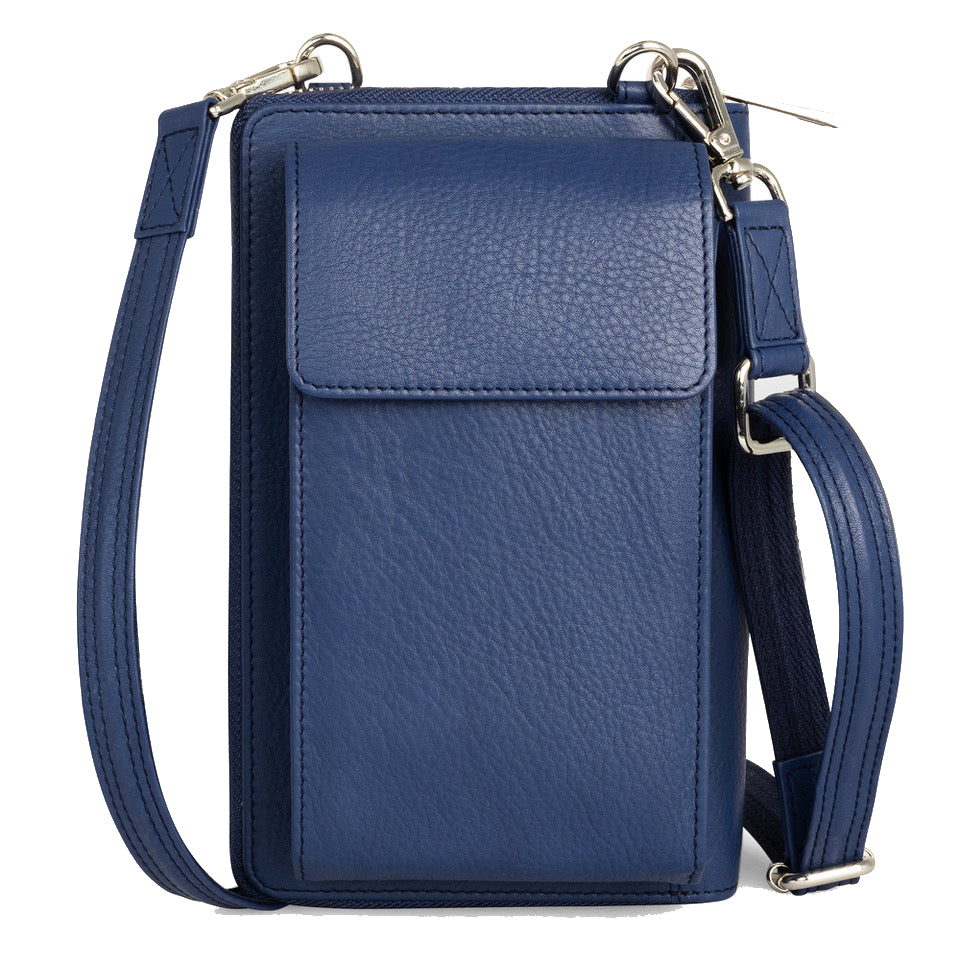
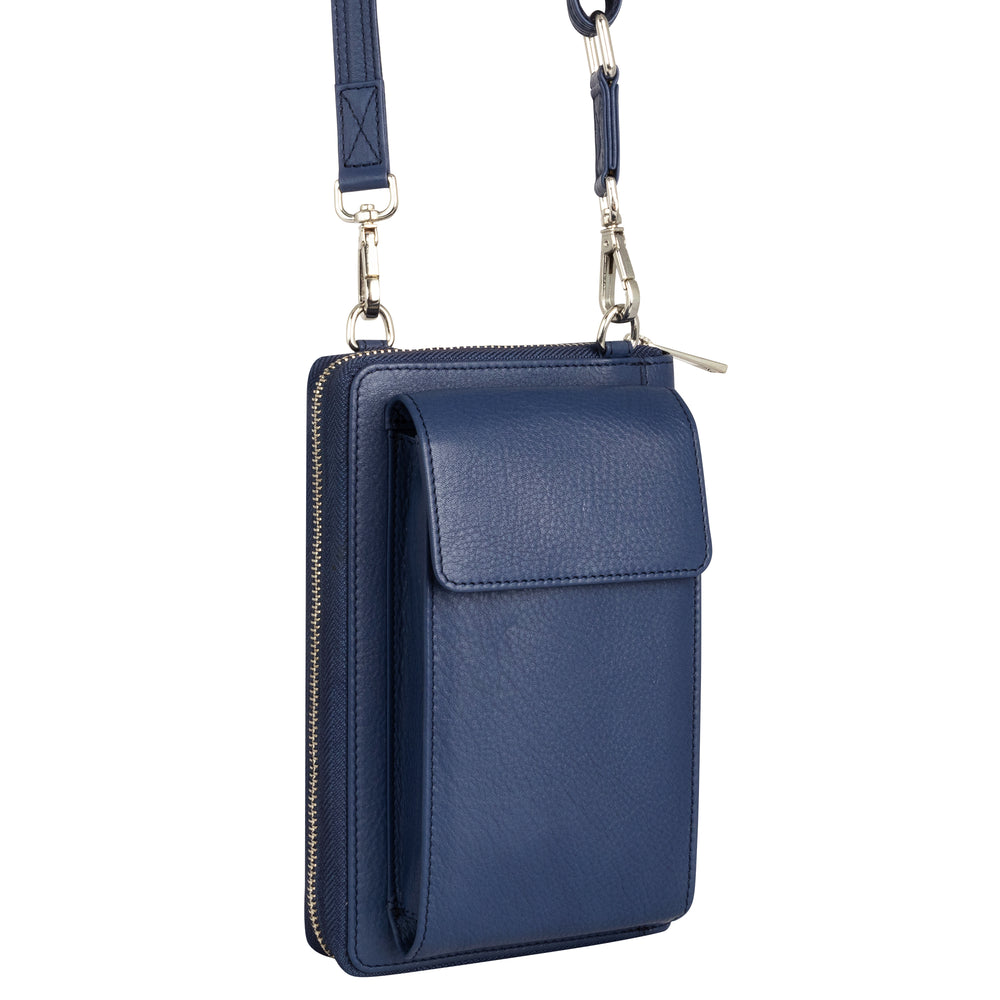
Women's crossbody purses solve the pocket problem entirely, keeping cards accessible without pocket constraints while adding slash-proof straps and passport capacity for travel. Choose from stylish options like the small crossbody wallet purse in Black Diamond Espresso or the XtraRoom crossbody wallet purse for added space and security.
Removable inserts and AirTag compatibility for versatility
Removable card inserts transform bifold wallets into ultralight carriers for quick trips. Pull the insert holding two cards and two IDs, leave the main wallet at home, and you've got beach-day or theme-park carry in a package slimmer than most phones.
AirTag slots add tracking without bulk, fitting into dedicated compartments in trifold secret pockets or slim bifold card sections. One customer uses his removable insert for Universal Studios visits, keeping his full wallet secure in the car while carrying only essentials through the park. Smart.
RFID Reality: Verified blocking works. A cybersecurity analyst tested Bull Guard wallets and confirmed that cards can't be scanned when stored inside, while the leather quality and gift-ready presentation exceeded expectations for the price point.
Wallet Sizing for Different Lifestyles: Matching Card Capacity to Your Routine
Business professional: bifold with multiple card slots and smooth ID window
Professionals juggle corporate cards, personal payment methods, insurance cards, and business cards daily. A bifold with eight to ten card slots plus a nonstick ID window simplifies airport security, client meetings, and expense tracking.
Thumb cutouts let you access specific cards without fanning the entire stack. The smooth ID window glides cards in and out for TSA checks or building access--no more cards catching on cheap plastic sleeves.
Minimalist commuter: cardholder or slim bifold for essentials
Daily commuters carrying transit passes, one credit card, ID, and maybe a gym membership card need four to six slots maximum. A slim bifold or card holder fits shirt pockets or front jeans pockets comfortably, eliminating back-pocket bulk during long subway rides or bike commutes.
Side pockets handle folded bills and receipts. One Boston commuter replaced his "big skinny" wallet with a Bull Guard slim bifold, maintaining the same thin profile while upgrading to genuine leather that darkens and smooths with age.
Outdoor adventurer: durable full-grain leather that withstands use
Trail use, camping trips, and outdoor activities demand leather that resists moisture, abrasion, and temperature swings. Full-grain leather develops protective patina while maintaining structural integrity through months of back-pocket carry, backpack storage, and exposure to the elements.
Crazy Horse and Buffalo leathers show character rather than damage when scratched, turning wear marks into visual stories. A landscaping contractor noted that his Bull Guard wallet survived daily job-site use, with the leather and stitching still looking fantastic months later. That's what I mean by built to last.
Gift-giver: recognizing the recipient's daily carry needs
Choosing wallet size for someone else requires observing their current carry habits. Does their wallet bulge with receipts and cards, or do they carry minimal essentials?
A trifold suits organized professionals who appreciate dedicated compartments, while a classic bifold works for traditional tastes. The gift-ready magnetic box, tissue wrap, and thank-you card make Bull Guard wallets turnkey presents.
One sister bought her brother a bifold after noticing his worn wallet--he immediately appreciated the card space, presentation quality, and comfortable size. Explore the Beyond Brown gift favorites collection for impressive, ready-to-gift wallets.
Choosing the Right Wallet Size: A Practical Guide

Measure your essentials before buying
Empty your current wallet and count what you actually carry daily. Separate must-haves from occasional cards.
Most people discover they carry three to five cards regularly and another four to six "just in case" items that rarely leave the slots. This audit reveals your true card wallet size needs.
Stack your essential cards and measure the thickness with a ruler: six cards equal roughly 0.18 inches, ten cards about 0.30 inches. Add 0.25 inches for leather and stitching to estimate your ideal wallet thickness.
Test pocket compatibility and comfort
Your perfect wallet fits where you actually carry it. Back-pocket users should measure pocket depth (usually 5 to 6 inches) and width (around 4 to 4.5 inches) while wearing their most common pants. Front-pocket carriers need slimmer profiles, generally under 0.5 inches thick when loaded.
Sit in a chair with your current wallet in place. If you feel pressure or need to remove it, you need a smaller footprint or a different carry method. Women's crossbody purses eliminate pocket constraints entirely while keeping cards secure and accessible during errands, childcare, or travel.
Understanding leather break-in and lasting fit
Quality full-grain and top-grain leather requires a brief break-in period--three to seven days of daily use. Card slots start snug to prevent cards from sliding out accidentally, then soften and conform to your specific stack. This molding process creates a custom fit that improves over time.
One financial advisor compared the experience to breaking in a baseball glove: initial firmness gives way to perfect form. Cheaper materials skip this characteristic because they lack the fiber structure to adapt, instead stretching loosely or cracking at fold lines within months.
RFID protection as part of the sizing decision
RFID-blocking capability adds negligible thickness while delivering measurable security. When evaluating card wallet size, consider whether your cards include contactless payment chips or whether you travel internationally where electronic pickpocketing occurs more frequently.
The protection integrates into the wallet structure rather than requiring bulky sleeves for individual cards. A cybersecurity analyst tested Bull Guard RFID blocking with professional equipment and confirmed that cards remained unreadable--proof that security and slim design can coexist.
The Patina Advantage: Genuine leather develops character through use. Oils from your hands, pocket friction, and daily handling create unique color depth and suppleness. This patina doesn't just look distinguished--it also improves how the leather conforms to your cards, making your wallet fit better at month twelve than in week one.
Making Your Card Wallet Decision
Selecting the right card wallet size connects three factors: your daily card count, where you store it, and the leather quality that'll serve you for years.
A bifold fits eight to twelve cards in a back-pocket profile. A trifold organizes twelve to eighteen cards with dedicated compartments. Minimalist cases handle four to eight essentials in front-pocket or bag-friendly dimensions. Each style respects the standard 3.37" by 2.125" card format while offering different organizational approaches.
The leather matters as much as the layout. Full-grain and top-grain hides from trusted tanneries break in without breaking down, developing protective patina that improves both appearance and function. RFID blocking adds security without bulk--verified by customers who test with professional scanners.
Your wallet accompanies you through thousands of transactions, security checks, and daily moments. Choose capacity that matches your actual needs, leather that improves with age, and construction that withstands years of pocket carry or bag storage. The right card wallet size doesn't announce itself with excess--it simply works, day after day, holding exactly what you need in a form that feels right in your hand and your life.
Frequently Asked Questions
What is the size of a wallet card?
My friend, a standard wallet card, like your credit card or driver's license, follows the CR80 international standard. These cards measure precisely 3.37 inches wide by 2.125 inches tall. This universal sizing ensures your Bull Guard wallet is always ready to carry your essentials, no matter where your adventures take you.
How big is a 2x3 wallet size?
When we talk about wallet card size, we're looking for something specific. A 2x3 measurement typically refers to a photo size, not the standard dimensions of your payment or ID cards. Your essential cards, the ones that truly empower you, are 3.37 inches by 2.125 inches.
Is 2.5 by 3.5 wallet size?
That measurement, 2.5 by 3.5 inches, isn't the standard size for the cards you carry daily. Every credit card, ID, and debit card adheres to a precise 3.37 inches by 2.125 inches. At Bull Guard, we design our wallets around these exact dimensions, ensuring a perfect, secure fit for your journey.
Is a card A5 or A6?
No, my friend, your cards are neither A5 nor A6. Those are paper sizes. Your payment cards, IDs, and transit passes are crafted to the CR80 international standard, which means they are 3.37 inches by 2.125 inches. This consistency is why your Bull Guard wallet offers such a seamless fit for your daily carry.
What is the CR80 standard for cards?
The CR80 standard is the universal blueprint for card production worldwide, dictating that cards are 8.56 cm by 5.4 cm, or 3.37 inches by 2.125 inches. This consistency means your Bull Guard wallet is designed to perfectly cradle your cards, whether they're from across the street or across the globe. It's about bringing order and strength to your everyday carry.
Why is precise card wallet size important?
Precise card wallet size is absolutely key to carrying life boldly, without frustration. If your wallet doesn't accommodate the exact 3.37" x 2.125" dimensions of your cards, they can bend, warp, or stick. A well-designed Bull Guard wallet ensures your cards slide in and out effortlessly, turning daily carry into a seamless routine.